








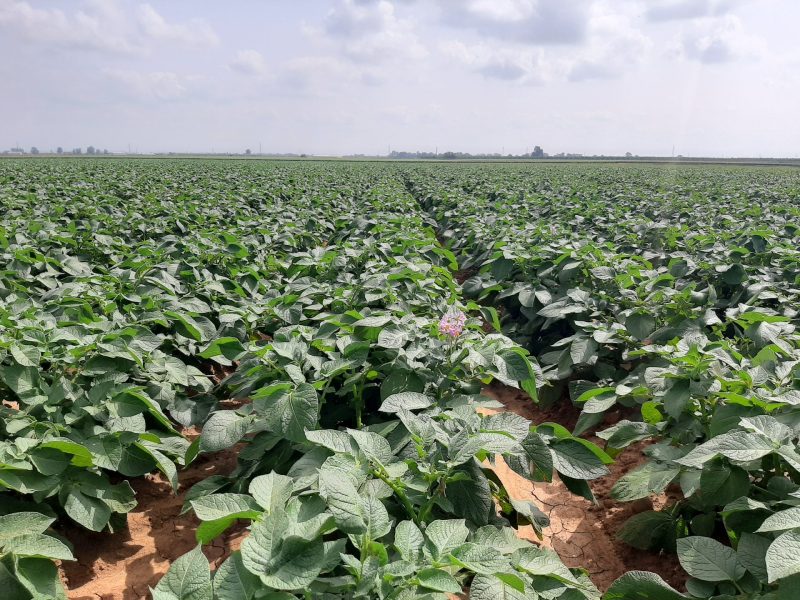
Javier Boceta, General Manager of Meijer in Spain, warns that potato cultivation is becoming increasingly difficult due to the shortage of phytosanitary products. The removal of key insecticides has led to serious issues, especially with wireworms and aphids, which transmit viruses in seed potatoes.
“Our sector doesn’t want subsidies; we need tools to compete,” says Boceta, criticizing the lack of response from European authorities. Despite these issues, the industry has achieved remarkable stability. Most potato production in key regions like Seville and Cartagena is now grown under contract, preventing price volatility and ensuring a more structured marketing system. The segmentation of the potato market in Spain has also advanced significantly, with specific varieties developed for different uses, such as potatoes for frying and chip production.
Egyptian imports: A commercial and sanitary threat
Another major concern is the massive influx of Egyptian potatoes into the European market.
Beyond the price impact, Boceta warns of the sanitary risks associated with these imports, particularly due to bacteria present in the irrigation water of the Nile Delta.
“Everything irrigated in that region carries a tremendous risk,” he warns, highlighting that the European Union allows these potatoes into key markets such as Spain, Germany, and other northern European countries.
The problem is further exacerbated by the lack of uniform controls.
Spain enforces strict phytosanitary controls, while other EU countries, such as Italy, have more lenient protocols, allowing contaminated batches to enter and circulate freely across Europe.
The Decline of seed potato production and the challenges of verdete
One of the most serious challenges in recent years has been the shortage of farmers dedicated to seed potato production. The security and profitability of growing potatoes for the frying industry have attracted many producers, leaving the seed potato sector in a fragile position. “There is fierce competition to secure seed producers,” explains Boceta, warning that some varieties are disappearing due to their susceptibility to viruses and the lack of suitable insecticides.
When it comes to verdete potatoes, Boceta believes the segment has reached its peak in Spain. Although verdete potatoes have gained popularity in recent seasons, they struggle with high discard rates and low profitability. “Some farmers may make money, but most end up losing,” he states, noting that supermarkets’ interest in verdete has already begun to decline.
Lady Jane: A future variety after thousands of genetic crosses
Despite the sector’s challenges, Meijer continues to innovate with new potato varieties that are more resistant and better suited to market demands.
One such variety is Lady Jane, a promising new frying potato developed over several years as a strong alternative in the segment.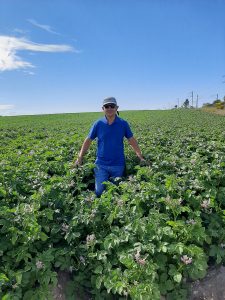
Lady Jane has undergone rigorous selection and offers excellent culinary quality, long storage life, and strong resistance to late blight (Phytophthora infestans), one of the main threats to potato cultivation.
Its high vigor makes it particularly suitable for regions such as Cartagena and Seville, traditionally dominated by the Agria variety, now facing a more resistant and productive alternative.
The development of a new potato variety is neither quick nor simple.
At Meijer, 750,000 genetic crosses are carried out each year. After a decade of selection, typically only one variety—if any—meets the required standards for quality and resistance. Even when a variety passes this stage, it undergoes five to six additional years of trials across different countries before commercial release.
“Lady Jane has passed all tests, and we are convinced it will be a great variety,” says Boceta, adding that it will see increasing market presence in Spain in the coming years.
Seville’s Potato Production
The potato campaign in Seville has experienced a 12% increase in overall production compared to last year.
However, Boceta warns that March rainfall could rebalance the effective hectares cultivated.
“Last year, the season was going perfectly until an Easter storm destroyed the plants. If something similar happens in May, it could impact the actual production reaching the market. There is no doubt that price and supply will be dictated by the weather. What we hope for is good quality,” he explains.
A future full of challenges, but a stronger sector
Despite these difficulties, Boceta acknowledges that the sector has evolved positively in recent years.
The key is for European authorities to abandon the “utopia” of mirror clauses, which are not effectively enforced, and instead provide real solutions to help farmers compete on equal terms.
“If we don’t have the tools to protect our crops, we are doing European agriculture a disservice,” he concludes.