








Fruit Today magazine had the opportunity to speak with María Dolores Molina, agricultural engineer and Sustainability Director at Proexport, who explained the scope and objectives of this initiative.
What does a Bio-network for pest monitoring and prediction involve?
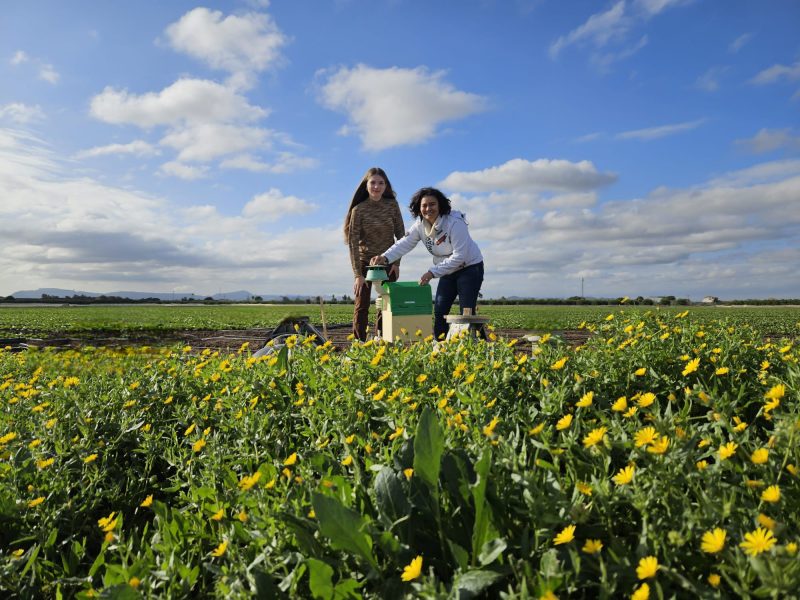
The Bio-network for pest monitoring and prediction is an initiative coordinated by the Association of Producers-Exporters of Fruit and Vegetables (Proexport). It consists of deploying a network of more than 170 insect capture devices incorporating Artificial Intelligence technology. Developed by the Slovenian company Trapview, these devices enable real-time verification of pest development and allow prediction of the evolution of three species of lepidopterans (caterpillars): Helicoverpa armigera, Spodoptera littoralis and Spodoptera exigua.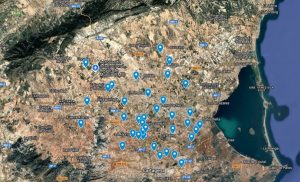
This is a pioneering initiative in Europe, implemented across more than 4,000 hectares of lettuce crops, brassicas (broccoli, cauliflower and other cabbages) and celery located in the Campo de Cartagena area, in the Region of Murcia (Spain).
What is the objective of implementing this initiative and what benefits does it bring?
The primary objective is to improve the efficiency of phytosanitary treatments, delivering multiple advantages. Notably, the information obtained helps implement pest control strategies in a targeted manner and at the exact right moment, reducing the risk of incorrect agronomic decisions. Another key benefit is increased biodiversity in the fields, as more efficient treatments promote a healthier ecosystem. Over time, the area covered by the Bio-network will host more beneficial predators to help combat crop pests. The system also ensures better control, monitoring and prediction of pest development and migration through more precise, less random and more sustainable use of crop protection products.
How is the information updated?
The data collected by the Bio-network of traps is sent daily to the cloud, where it is analysed using AI. Both individual and aggregated data are accessible to all project collaborators through a software platform that generates graphical forecast reports on pest evolution and migration.
In terms of sustainability, what does this technology contribute?
It reduces the carbon footprint and, therefore, greenhouse gas emissions in crop production, as it cuts the number of phytosanitary treatments, avoids thousands of technician journeys to farms to manually verify and count insect captures, and increases on-farm biodiversity.
Who is involved in this initiative?
The Bio-network for pest monitoring and prediction is the result of close collaboration between Agromark, Bonduelle, Cota 120, Florette, Fruca, G’s España, Gregal, Jimbo Fresh, La Huerta de San Isidro and Behr Iberia, most of them members of Proexport, which acts as the project coordinator.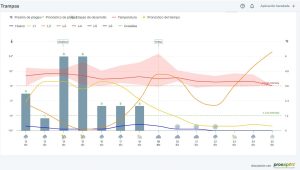
Bio-network forms part of the project “Innovative agricultural practices to contribute to environmental improvement and biodiversity in the Mar Menor area” (NewAgroMenor), supported by the Biodiversity Foundation of Spain’s Ministry for Ecological Transition and the Demographic Challenge, through grants aimed at environmental restoration and improvement in the agricultural sector. The project seeks to contribute to restoring the ecological functionality of the Mar Menor.
At research level, which partners are involved in the project?
NewAgroMarMenor is the acronym for the project “Innovative agricultural practices to contribute to environmental improvement and biodiversity in the Mar Menor area”, promoted by the Technical University of Cartagena (UPCT), which conducts numerous studies in collaboration with Proexport.
The project adopts a holistic approach and focuses on improving agronomic practices to support integrated, sustainable and environmentally respectful agriculture. Actions include practices aimed at increasing irrigation water and nitrogen use efficiency, promoting organic carbon accumulation and soil microbiological activity, improving the efficiency of treatments and enhancing biodiversity in crop fields.
How important is R&D&I in the sector?
It is absolutely essential. Sustainability must go hand in hand with scientific research and, above all, with the most innovative technology.