









Moleaer’s nanobubble technology has proven to be a true innovation in the agricultural sector, both in greenhouse and open-field crops. Although it began as an innovation startup in the United States, it is now a global leader in this technology. To serve the European market, the company operates a production facility in Almería, where it assembles and manufactures patented generators for Europe and Africa.
What has Moleaer’s journey been like?
Moleaer has begun to establish itself as the industrial standard in nanobubble generation. The figures speak for themselves: more than 4,000 generators have been deployed worldwide, and the installed capacity enables the sustainable treatment of over 3.5 billion litres of water per day.
In a global context marked by water scarcity and energy crisis, our technology is essential. We have improved crop health on thousands of farms, increasing yields by up to 56% in some cases, while drastically reducing the use of chemical fertilisers and optimising the water footprint.
What specific benefits does this technology offer crops?
The key lies in physics. Our generators connect to the irrigation system and inject trillions of nanometric gas particles into the water—invisible to the naked eye (less than 200 nanometres, around 2,500 times smaller than a grain of salt). Unlike traditional systems, we achieve a gas transfer efficiency above 85%, reaching optimal concentrations of dissolved oxygen (DO) that are essential for plant growth. This promotes better root development, reduces pathogen growth and results in higher-quality crops.
In addition, nanobubbles improve soil infiltration and wettability, enhancing the uptake of nutrients and water. They enrich irrigation water cost-effectively with DO nanobubbles, leading to improved water quality, cleaner irrigation systems and higher yields—even under high temperatures. They also help remove biofilm from dripline emitters, reservoirs and supply networks, prevent root diseases, reduce algae and improve soil conditions.
Do you have results or studies that validate these claims?
Yes. Multiple research institutions and universities in the United States, Europe and Latin America have confirmed transformative results in both open-field and greenhouse crops, grown in soil and hydroponic systems.
RELATED NEWS: Moleaer is opting for Almeria
In cucumber, the Cajamar Foundation recorded a 16.2% yield increase; the University of Almería reported a 13% improvement; and Tecnova observed a 10.5% increase in total fruit weight. In tomato, Agrocolor certified a 9.8% increase in total production, confirming the effectiveness of nanobubbles across different crop cycles.
What effects does this technology have on soil?
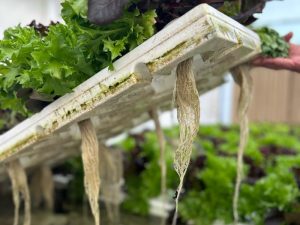
Its physicochemical properties improve water capillarity and infiltration at the root level, nutrient uptake and plant resistance to environmental stress. By oxygenating the rhizosphere, it enhances the absorption of key elements (such as calcium and potassium) and promotes soil life. Beneficial bacteria and fungi populations are stimulated, while anaerobic pathogens are suppressed. We regenerate soil health while nourishing the crop—this is the future of regenerative agriculture, both organic and conventional.
Is this technology applicable to other regions and crops in Spain?
Absolutely. We are working with berries, lettuce and brassicas, where root health is decisive for final quality, as well as with strategic woody crops such as citrus, subtropical fruit, grapes and pistachio.
What is the generator like? Is integration into an operating farm complex?
We offer a wide range of systems, and our factory in Almería allows us to size installations according to each client’s needs. One of our most recent models is INDALO™, designed for the climatic conditions of Mediterranean and intensive agriculture. It is robust, reliable and easy to integrate into existing irrigation headworks.
Our systems are installed in parallel with the existing irrigation system, without stopping farm operations or requiring major construction works. They are automated units with minimal maintenance requirements.
How long does it take to achieve a return on investment?
By combining increased marketable production with savings in operating costs, ROI is typically rapid. In intensive agriculture, most customers recover their investment within 12 to 24 months.
Chemical regulations are becoming increasingly strict—how does Moleaer help in this regard?
Our technology is a strategic ally for complying with Green Deal regulations. By using a physical method to disinfect and oxygenate water, growers can drastically reduce the use of traditional biocides (such as chlorine or hydrogen peroxide). This results in cost savings and ensures a more sustainable and environmentally friendly production model.