





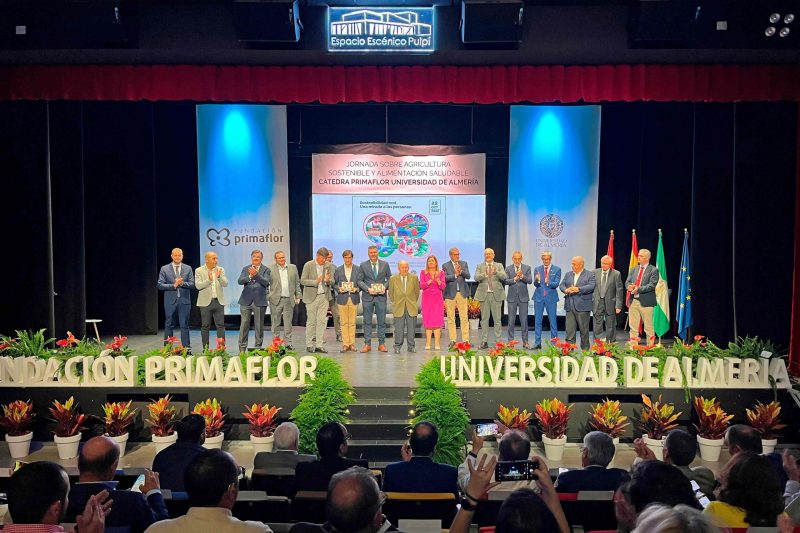
The 5th Primaflor–UAL Chair Conference, held in Pulpí, offered an in-depth analysis of purchasing habits and the challenges facing the market. “We need to raise our gaze to decide where we’re going,” stated Ignacio González, president of AECOC, in a context where generational inequality — young people today have 35–40% less purchasing power than 25 years ago — is pressuring consumption and becoming “a time bomb.”
César Valencoso, Consumer Insights Director at Kantar Worldpanel, summarised the current landscape: “There are more elderly people, we eat worse, and meals are increasingly being replaced by irregular snacking.” In his presentation, he outlined the structural trends: ageing, the breakdown of traditional meal patterns, declining fresh-produce consumption and an innovation pipeline that “has been losing differentiation power for years.”
Both speakers agreed that the market is facing a more demanding consumer — one who mixes channels, seeks convenience, and adjusts the basket based on perceived price and the real quality of the product. This evolution forces companies to work further ahead, refine their value proposition and understand that placing a product on the shelf is no longer enough: it is essential to connect with purchase motivations and the economic context of each household.
A ‘reason to believe’ in brands
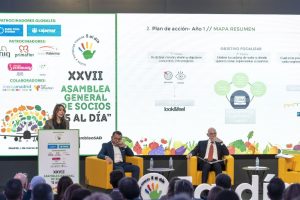
 In the roundtable with González and Valencoso, speakers stressed that the industry must offer objective arguments to build brand — a true “reason to believe.” Consumers are not willing to pay more unless they perceive a direct benefit.
RELATED NEWS: Primaflor faces a season shaped by climate and demand
The discussion led to a reflection on the need to give fruit and vegetable products clear, measurable attributes: consistent flavour, shelf life, origin, or formats adapted to new lifestyles. Without these, they agreed, it is difficult to justify a higher price or earn loyalty. They also noted that sustainability must be integrated into the value proposition without directly passing the cost on to the consumer, who values the effort but is generally unwilling to pay a premium in most categories.
Retail: Freshness and active listening
In the final session, Eusebio Rubio, board member of Ahorramás; José Antonio Benito, president of Covirán; and Santiago Pulgar, commercial and marketing director at masymas, highlighted that freshness, continuity of supply and perceived quality remain decisive — as well as adjusting assortments and strengthening the in-store experience.
Fruit and vegetables are a key factor in differentiating retailers. “Freshness is what concerns us most: if the chain fails there, we lose everything. Replenishment is just as important as the assortment,” they stressed. Close proximity to suppliers, a solid logistics chain and joint planning with the origin help guarantee regularity, flavour and uniformity on the shelf — aspects especially valued in a context of climate volatility.
They also agreed that active listening — through data, in-store interactions or loyalty programmes — has become essential for adapting the range and responding to the specific needs of each area. In a market where consumers change quickly and competition is intense, anticipating needs and offering a range perceived as “reliable” makes the difference.