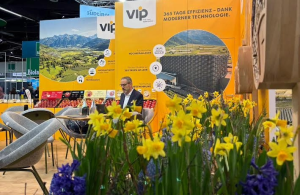







The firm, which now has more than 700 hectares planted, considers it essential to reinforce its relationship with those who work the fruit in the field. “We must take into account the vision of the person on the other side and act as a partner to the grower. It is not just about granting a licence, but about helping them achieve profitability,” says Joan Antoni Caballol, CEO of Sando Clementine.
Training and free advisory services
The new office has a practical purpose. It will host technical training sessions in small groups, aimed at both independent growers and cooperative members, with a clear goal: achieving the right fruit sizes, higher quality and better commercial prices.
Support will be free of charge for all licensees and will include field visits, analysis of specific issues and recommendations on crop management and irrigation. The philosophy is clear: “Educating the market is costly, but not educating it is much more expensive,” Caballol says.
This personalised advisory work also seeks to protect the final product. The director recalls that “a clementine can be eaten like a bonbon,” but not if ripening is forced or if the fruit is harvested too early. Training therefore includes promoting a consumer-oriented quality culture.
Sando grows
The variety’s expansion plan follows one clear principle: orderly growth with growers who handle the fruit responsibly, avoiding speculation and reviewing licences case by case. Some licences have already been revoked when they failed to meet the required standards.
At the same time, Sando is accelerating its international rollout. The variety has already reached Calabria (Italy) and is at an advanced stage in South Africa, where the first trees have been planted after completing quarantine. Progress is also being made in Australia, with plant material in the final phase before field trials, and in California, where the firm expects to clear quarantine in the coming months. The next destination will be Peru, where administrative procedures have already begun.
This expansion into the Southern Hemisphere will extend the variety’s presence on retail shelves and help maintain price stability through complementary production between Spain and other origins.
Growth in organic
Sando views organics as a strategic path and already has initial plantations in the province of Castellón as test plots, along with experienced organic growers such as Citruslandia and new plantations in Huelva, where organic cultivation is beginning to establish itself.
RELATED NEWS: Valencian Citrus PGI continues to gain momentum
Caballol acknowledges that the organic segment “is struggling,” but he also sees a loyal consumer base and a premium niche with potential, especially in varieties with strong shelf life and pest resilience — such as Sando.
A clementine to educate consumption
The director insists on the need to educate both the market and consumers. In his view, appearance alone is not what matters: repeatable flavour is what drives consumption. At a time when ultra-processed foods are gaining ground, it is essential that every piece of fruit encourages repeat purchase.
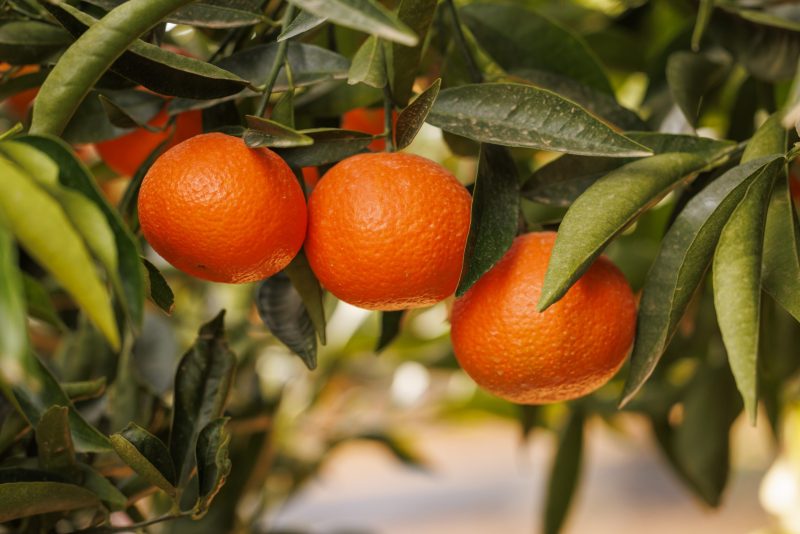
The variety plays in favour of this objective: it is alternaria-tolerant, holds well on the tree when the market is slow, and maintains excellent organoleptic quality once it reaches optimal maturity.