








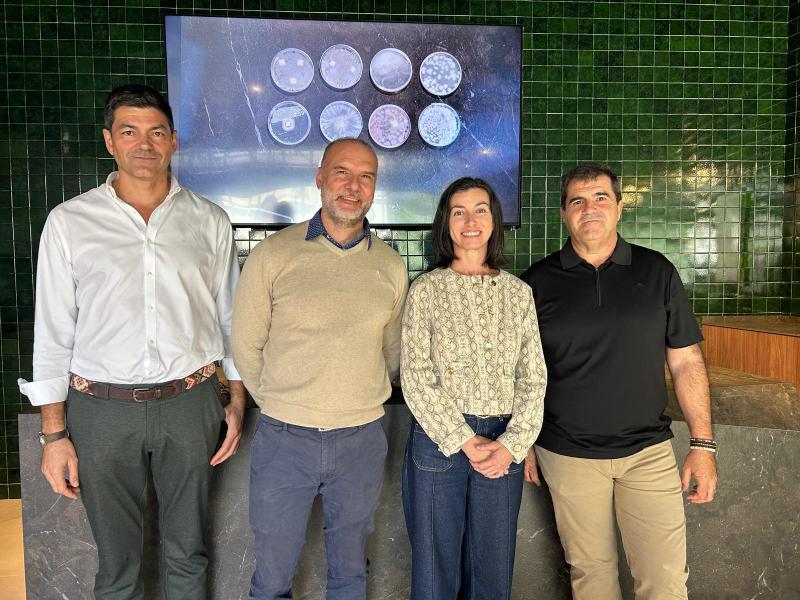
Regenerative agriculture, the role of the microbiome and the need for new biological tools shaped the technical session “Integration of microbial insecticides in treatment programmes with prebiotics,” held on 6 November in El Ejido. The meeting brought together technicians and growers to analyse current pest-control challenges and how biosolutions can address them.
Evolution of the Vademécum
Carlos de Liñán, director of Portal Tecnoagrícola, opened the session with an overview of the evolution of Vademécum since its creation in 1980. He highlighted how the tool has evolved from a printed publication focused mainly on plant-protection products to a digital system with more than 8,000 references.
“When my father started, nearly two-thirds of all products were phytosanitary inputs. Today, phytosanitary products account for around 1,000 out of the 8,000 listed in the Vademécum,” he noted.
For the first time, the platform now includes a section dedicated to regenerative agriculture, where inputs are classified as authorised, regenerators or prebiotics, following evaluations by the scientific consortium Food for Sustainable Future. In addition, between the end of this year and early 2026, it will launch a tool to integrate information into the digital farm logbook, which becomes mandatory in 2027.
Measuring the impact of inputs on the microbiome
Mercedes Tirado, coordinator of Food for Sustainable Future, explained the scientific foundations behind the accreditation of regenerative agriculture and detailed the protocols used to evaluate the effect of different inputs on the soil and plant microbiome. She presented examples of microbiological plates in which native microorganisms such as Penicillium, Beauveria or Bacillus exert control over pathogens like Fusarium or Sclerotinia. She also highlighted the capacity of prebiotics to increase colony-forming units, as in the case of the combined use of REKO® and Velifer®, which reinforces the crop’s natural defence system.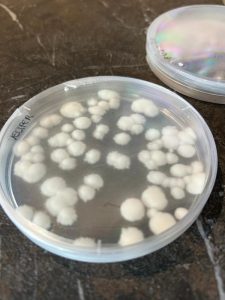
Velifer®: next-generation bioinsecticide
Óscar Barbero, technical-commercial delegate at BASF, focused on Velifer®, the company’s first bioinsecticide developed from the exclusive strain Beauveria bassiana PPRI 15339 and its first product authorised for regenerative agriculture. In a context marked by reduced active substances and increased pest pressure from whitefly, thrips and Tuta, Barbero highlighted its oil-dispersion formulation, rapid action between 0 and 6 hours, high compatibility with beneficial fauna and the absence of resistance risk. In trials with Thrips parvispinus, the bioinsecticide achieved efficacy levels of 93% under controlled conditions.
Reko®: the prebiotic that activates the microbiome
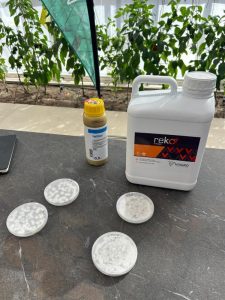 The session concluded with Francisco Javier del Águila, director of Viagro, who explained how REKO® works as a prebiotic capable of activating native microorganisms in the crop and enhancing the performance of microbial tools such as Velifer®.
Del Águila emphasised that the word prebiotic is often associated with prevention, when in fact it is “the key that triggers” beneficial microbial activity—conditioned by factors such as water quality, salinity or humidity. He showed examples in which the addition of the product multiplied the presence of Beauveria compared with applying the bioinsecticide alone, achieving superior control in field trials.
As an example, he presented plates where the addition of REKO® multiplied the presence of Beauveria relative to the bioinsecticide-only treatment, achieving higher control of thrips and whitefly in commercial trials.
The session concluded with a clear message: the future of crop protection will rely on scientifically validated biosolutions, a deeper understanding of the microbiome and the integration of microbial insecticides with tools that enhance their performance—such as Velifer® and REKO®.