









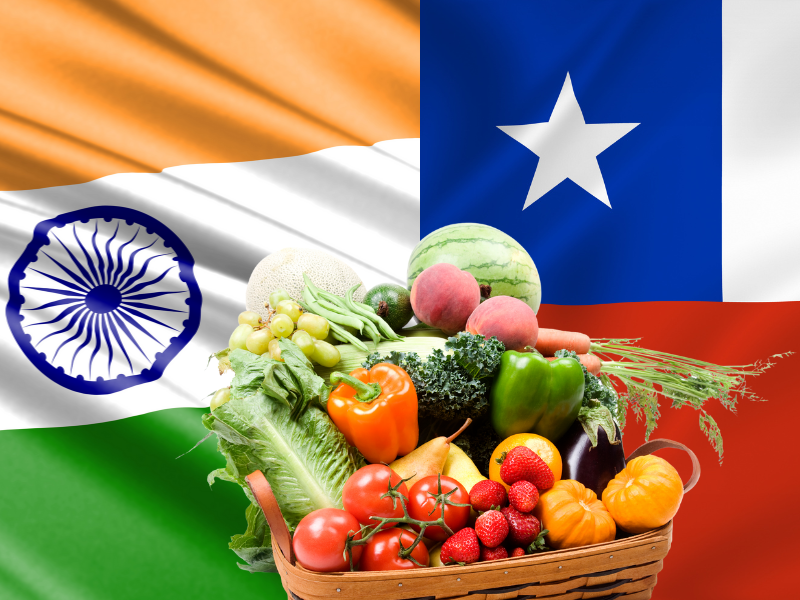
Following prolonged technical work and bilateral coordination, Chile and India have finalised a technical and scientific cooperation agreement in horticulture that will enable the implementation of a joint 2025–2027 Action Plan between the Instituto de Investigaciones Agropecuarias (INIA) and the Indian Council of Agricultural Research (ICAR), according to ODEPA.
The agreement turns years of dialogue into a three-year operational agenda covering joint research, technology exchange and capacity building, with a strong focus on temperate crops and post-harvest management—an essential factor for fruit competitiveness in distant markets.
The fruit component of the agreement targets nuts and fresh fruit of high production and commercial relevance, including walnuts, almonds, pistachios and pine nuts, as well as kiwifruit, apples, berries, peaches and plums, among others. This move is strategic for an export basket in which fruit condition, shelf life and the development of varietal and technological solutions are decisive for market performance and grower returns—particularly in a country like India, where consumption of imported fruit continues to expand steadily.
RELATED NEWS: Chilean cherry shipments to U.S. up 63% early season
For the industry, the post-harvest element carries particular weight. India is already a key destination for certain Chilean products, especially nuts. According to ODEPA’s Fruit Bulletin (August 2024), India ranked as the leading destination by value for Chilean walnuts, accounting for a significant share of shipments during that period. This underscores how applied scientific work on quality, handling and technology can translate into concrete competitive advantages.
The agreement falls under the existing Memorandum of Understanding on agricultural cooperation between the two countries’ ministries of agriculture and adds to a bilateral relationship that Chile has been steadily deepening with India in trade and agri-food positioning.
In practical terms, the 2025–2027 Action Plan creates a platform to accelerate innovation in horticulture, improve post-harvest performance across long supply chains and build shared capabilities—areas where research can directly impact arrival condition, claims, quality consistency and, ultimately, value per box.