







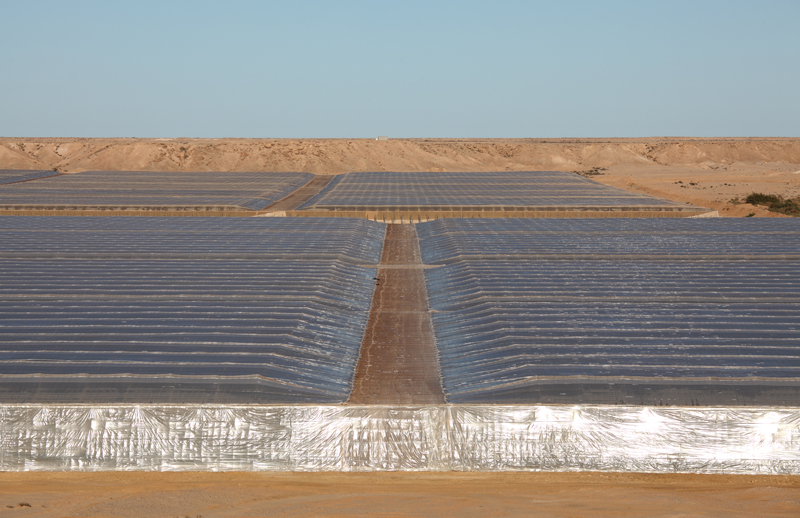
The approval on 26 November of the amendment proposed by the European Commission to Delegated Regulation 2023/2429 on marketing standards for fruit and vegetables will allow products from Western Sahara to be marketed in the EU under the regional designations “Dakhla-Oued Ed-Dahab” and “El Aaiún-Sakia El Hamra”, instead of the reference to “Western Sahara”. This runs counter to the ruling of the Court of Justice of the EU (case C-399/22) and to EU legislation, which requires the country of origin to be indicated on labelling.
Is an unprecedented situation because an EU regulation, which must be complied with by all marketers in the EU, is being amended to benefit production located in a third country. This harms European consumers, who will not have clear origin labelling, and also the Spanish sector, which will have to compete with products deliberately identified in a confusing way and with forecasts of strong growth, as highlighted at the FEPEX Tomato Committee meeting held on Friday.
In addition, European producers are facing another unprecedented situation: production from the Sahara will receive EU funding in key sectors such as water, including irrigation, energy and desalination. This is set out in the agreement between the European Commission and Morocco dated 2 October, which is already provisionally in force.
This new agreement circumvents the ruling of the Court of Justice of the EU of 4 October 2024, which specified that the Association Agreement between the European Commission and Morocco, insofar as it concerned production from the Sahara, was not legal because it had been signed without the consent of the Sahrawi people.
RELATED NEWS: EU – Morocco agreement: A paradigm of unfair competition
Under the new treaty, the consent of the Sahrawi people is presumed through the approval of two measures: funding for the region in key sectors—water, including irrigation, energy and desalination—and humanitarian aid for the Tindouf refugee camps, as explained by FEPEX director José María Pozancos at the committee meeting.
This will further intensify the problem of unfair competition suffered by Spanish production compared to that of the Maghreb country. Not only are the tariff benefits granted under the Association Agreement to Moroccan products being extended to those from the Sahara, but the latter will also receive EU aid for their development in crucial areas such as water, whose scarcity is one of the main challenges facing the Spanish sector.
For this reason, FEPEX considers it crucial for the survival of the Spanish tomato sector—whose production has fallen by 31% over the past decade and exports by 25%, compared with a 269% growth in exports from the Maghreb country—that the European Parliament does not ratify, in the coming months, the agreement between the European Commission and Morocco of 2 October.
Chaired by Juan Jesús Lara, the FEPEX Tomato Committee is made up of representatives from producer associations in Murcia (Proexport), Almería (Coexphal), Granada (Faeca), Alicante (Fexphal) and the Canary Islands (Fedex).