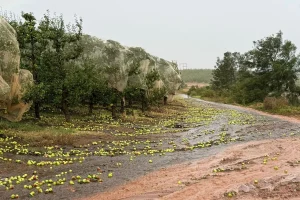










Specialised in lettuce, baby leaves and celery, the company began the season several weeks late due to the continued presence of product in European markets, where mild temperatures prolonged the end of their harvests.
With insufficient demand and Murcian crops accelerated by the heat, the market became completely unbalanced. “Here, the crops were running two or three weeks ahead, and the market was running two or three weeks behind,” explains José Carlos Gómez, executive at El Dulze. This combination forced the destruction of entire fields to avoid exporting aged product or produce with poor commercial performance.
The situation has shifted in recent days with the arrival of cold weather, which has slowed crop growth and may create the opposite effect: a temporary window of lower supply, especially in lettuce. However, these fluctuations are common each season when sudden changes in temperature and light occur.
Fighting for prices
This production instability is compounded by another decisive factor: pressure on purchasing prices from European retailers. According to the company, negotiations since spring have been “more aggressive than usual,” with programmes lost over differences of 10% to 15% compared with sustainable levels.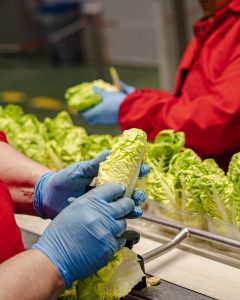
All of this is happening as costs continue rising — particularly energy, labour, water and land rental. “Our costs keep going up and the market is not responding to that increase,” Gómez notes, emphasising that “today, we are not fighting for cents; we are fighting for the viability of the business margin.”
Tension in the field
Managing agricultural labour adds another source of concern. El Dulze describes a climate of high tension during harvesting activities, where labour is not only scarce but increasingly difficult to retain in stable teams capable of maintaining campaign rhythm. “I don’t know if it’s a lack of people or a lack of motivation, but the situation is especially tough,” says the executive. The company also perceives growing friction between growers and workers, affecting the daily organisation of tasks.
A critical spring
From spring onwards, an even greater problem will emerge: the disappearance of the only effective phytosanitary product remaining for aphid control in lettuce. El Dulze already uses biological control through releases of beneficial fauna in open field, but warns that this strategy may be insufficient under warm temperatures and without chemical alternatives.
RELATED NEWS: Proexport brings Murcian tomatoes to Fruit Attraction
The problem will not be limited to Spain: “This is a European-wide issue. It will put at risk plantings in countries that produce in summer without tools to ensure aphid-free crops,” Gómez stresses. There are already productions on the continent that could not be sold due to this issue.
With rising costs, tough negotiations, a lack of plant protection tools and an increasingly unpredictable market, El Dulze is directing its future strategy towards developing disease-resistant varieties in collaboration with seed companies. “More than the final product, we are focusing on being able to grow the right variety,” Gómez concludes.