



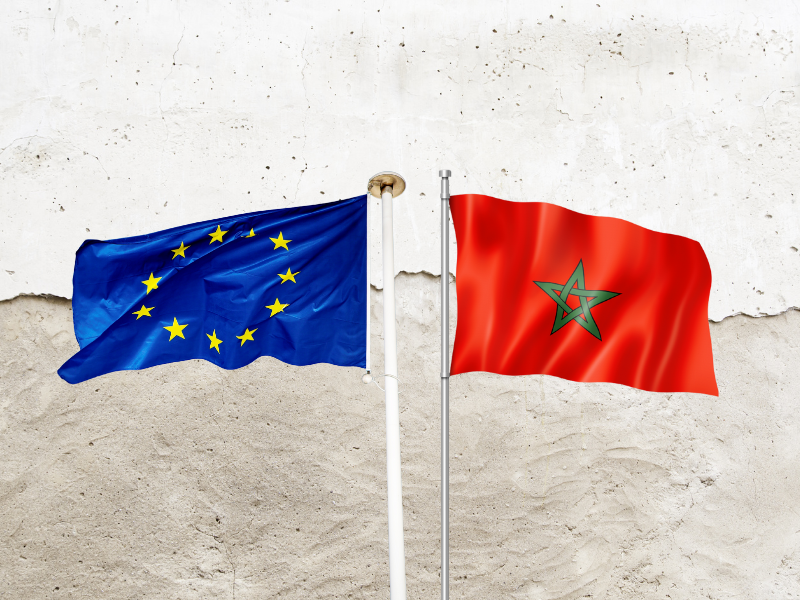
The EU–Morocco Association Agreement represents a clear paradigm of unfair competition for EU fruit and vegetable producers in the areas of labour, plant-health and environmental standards. According to FEPEX representative José María Pozancos, this agreement has already caused serious damage to the Spanish sector, displacing Spain as the EU’s main tomato supplier. These impacts will intensify with the amendment to the Agreement approved in October.
In the labour sphere, minimum wage costs for employers in Spain amount to €9.74 per hour worked, while in Morocco they stand at €0.98 per hour. This unfair competition affects not only Spanish producers but also those in other Member States, since labour costs in Italy are similarly high (€9.68/hour), and in Poland they reach €7.43/hour.
According to Pozancos, unfair competition has been occurring for many years in the plant-health and environmental fields, given that Morocco uses products banned under multilateral environmental protection agreements. For example, methyl bromide, a highly effective insecticide and fungicide prohibited in the EU since 2005 due to its impact on the ozone layer, is authorised in Morocco.
For FEPEX, the EU–Morocco Association Agreement has already caused significant harm to Spanish tomato growers, who lost their position as the EU’s main supplier in 2022. But the unfair competition extends far beyond tomatoes, affecting the entire fruit and vegetable sector. Since the Agreement entered into force in 2012, EU imports of fruit and vegetables from Morocco have increased from 831,338 tonnes to 1.4 million tonnes, a 71% rise.
RELATED NEWS: Concern in the fruit and veg sector over the revision of the EU–Morocco agreement
The situation will worsen further with the amendment to the Association Agreement reached between the European Commission and Morocco in October, already provisionally in force. This amendment authorises production from Western Sahara to benefit from the Agreement’s preferential tariff regime as if it were Moroccan territory, generating even more competitive pressure.
Moreover, production from Western Sahara will be labelled in a way that is confusing for consumers, circumventing EU legislation that requires products marketed in the EU to display the country of origin. Under the amended Delegated Regulation 2023/2429 on marketing standards for fruit and vegetables, adopted on 26 November, produce from this area may be labelled with regional names instead of clearly stating its true origin.
For these reasons, FEPEX considers it essential that the European Parliament does not ratify the Agreement reached in October between the European Commission and the North African country.
Organised by VOX, the round table “Unfair Competition: The EU–Morocco Agreement. EU Values for Sale” took place yesterday at the European Parliament headquarters. Speakers included COAG Secretary-General Miguel Padilla, ASAJA Almería President Adoración Blázquez, FEPEX representative José María Pozancos, and Andalusian MP Rodrigo Alonso. MEPs Mireia Borrás and Jorge Buxadé were also present.