




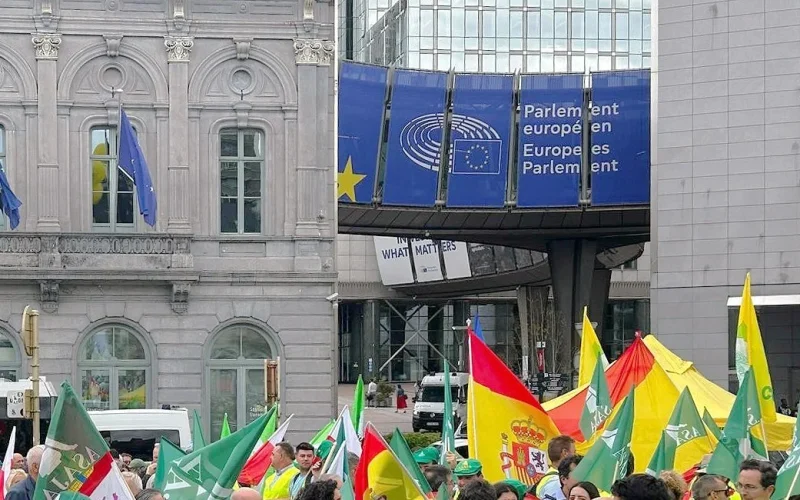
COPA-COGECA recalls that agriculture has always been a fundamental pillar of the European project, essential for the economy, food security, and social stability. Farmers and cooperatives supply high-quality food and raw materials in an increasingly uncertain global context. However, the sector is facing mounting pressure due to rising costs, regulatory complexity, legal uncertainty, concentration of commercial power, and trade policies that, according to the sector, weaken EU standards and productive capacity.
This situation is jeopardising the viability of farms and cooperatives, slowing investment, hindering generational renewal, and increasing dependence on imports. Although the European Commission publicly recognises the strategic importance of agriculture, farming organisations and cooperatives denounce inconsistencies between its rhetoric and its decisions, including CAP budget cuts, the push for trade agreements such as Mercosur, and new directives that increase uncertainty and costs.
The sector warns that European agriculture is at a turning point and demands concrete responses around three key pillars:
- A strong and well-funded CAP after 2027
Fair and transparent trade
Genuine regulatory simplification and legal certainty
Cooperativas Agro-alimentarias de España, together with their counterparts in other Member States, support the mobilisation to highlight the need for policies that guarantee the viability of farmers and livestock producers, especially those linked to cooperative structures that provide added value and stability in rural areas.
RELATED NEWS: Brussels insists on avoiding a fragmented CAP and calls for territorial balance
The European cooperative movement insists that the EU must balance environmental objectives with the economic sustainability of farms, ensuring that regulatory requirements do not undermine production or generational renewal.
Cooperativas Agro-alimentarias de España stresses that, within the legislative reforms expected over the coming months, the sector must be heard and realistic, proportionate measures must be adopted that align with agricultural competitiveness.
The demonstration on 18 December once again shows that the future of European agriculture depends on policies that recognise its essential role and provide effective tools to face economic, climatic, and social challenges.