








In a context marked by geopolitical instability and severe climate events, the value chain is seeking to define urgent joint actions to guarantee global food security, accelerate innovation and ensure the supply of high-quality inputs for farmers and growers.
Innovation and gene editing: the starting point of the agricultural chain
Under the theme “Shared actions, resilient futures”, the opening sessions of the congress made it clear that the competitiveness and sustainability of producers depend on advanced plant genetics. Today’s agricultural sector faces restrictive regulations and an urgent need for varieties that are more resistant to drought and emerging pests.
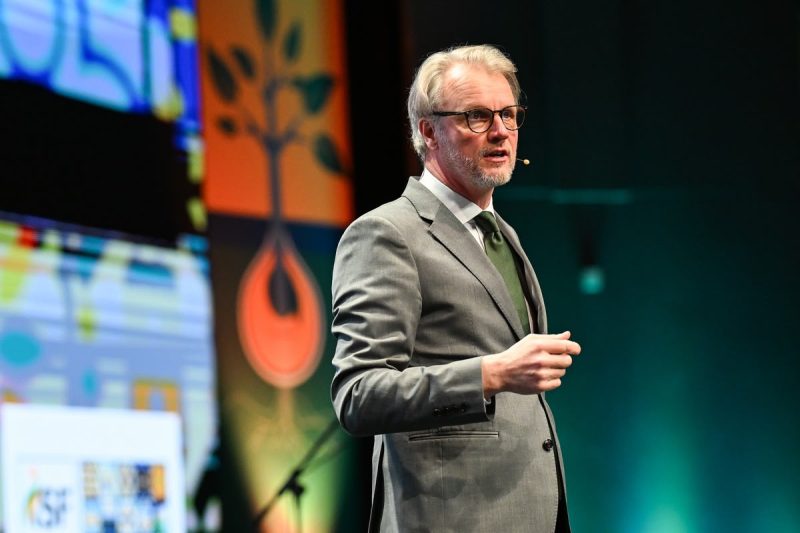
Michael Keller, Secretary General of the ISF, highlighted the leading position of the host country: “Portugal is number one in the Resilient Food System Index in terms of availability, accessibility, quality, safety, innovation and nutrition.”
In his opening address, Keller recalled a fundamental principle for international trade: “Seed is the starting point. We must remind everyone that no country is independent when it comes to seed. That is the starting point when we think about resilient food systems.”
He also called for greater recognition of the corporate sector: “Too often in international organisations and food summits, the private sector is not recognised for the value it brings to discussions and for building innovation bridges to farmers.”
For his part, José Manuel Fernandes, Portugal’s Minister of Agriculture and Fisheries, firmly supported the adoption of new technologies applied to plant breeding. “Innovations such as new genomic techniques, which I prefer to call ‘new breeding techniques’, can help develop crops that are more resilient to drought, more resistant to disease and better adapted to nutritional needs. We support these techniques and call for balanced, science-based regulation that ensures safety while enabling innovation and competitiveness.”
Fernandes stressed that “we cannot be afraid of the word competitiveness; we need to place it on the same level as social cohesion, territorial cohesion and the goal of sustainability.”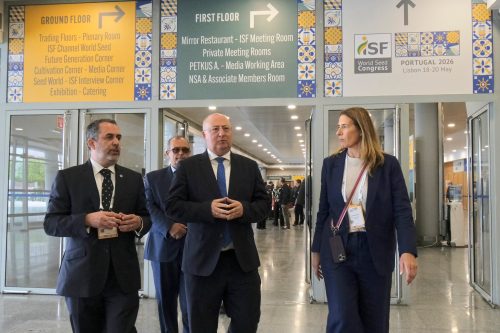
Logistics, employment and barriers to global trade
Global market trends and financial pressures on international fruit and vegetable production were also high on the agenda.
Anup Jagwani, Global Director of Farming & Agribusiness at the World Bank Group, presented concerning macroeconomic data on the logistical and cost pressures affecting the agricultural sector. “The price of urea has increased significantly, by more than 30% and perhaps 60% by the end of the year. In addition, issues such as drought in South Africa reduced cereal output by between 16% and 50%.”
Jagwani also emphasised the social role of the sector: “Seed is life, innovation, food security and the building block of employment. Reducing food insecurity and increasing production cannot be achieved without ensuring that farmers have access to the right, contextually relevant seeds.”
Along the same lines, Edwini Kessi, Director of the Agriculture and Commodities Division at the WTO, stressed the need to remove unjustified technical barriers. “International trade is not an end in itself, but a means to improve people’s livelihoods. We need a rules-based trading system that is predictable and fair. Export restrictions and non-tariff barriers in the seed sector not only harm the industry, but directly put global food security at risk, especially in the most vulnerable regions.”
Sustainability, generational renewal and agri-food market figures
Long-term resilience in fruit and vegetable companies requires integrating the vision of new generations and understanding the financial scale of the input market.
Jade Alexis Sands, Youth Ambassador of NGIN (Next Generation Is Now), brought the perspective of future agricultural leaders. “Young people and younger generations have the wonderful habit of taking what is traditional and transforming it into something new, looking at things from a different perspective, because that is what innovation is about. We need a real seat at the tables where decisions are made, not only to be heard, but to co-design the food systems of tomorrow.”
From ISF’s operational leadership, the federation’s commercial and governance guidelines were also presented. Marie Tamahzian, ISF Operations Director, explained that the congress has drawn a major international presence that is helping to drive supply agreements. “We have more than 1,800 seed professionals here, representing around 900 commercial companies, from family businesses to multinationals, from more than 80 countries.”
Ellen Sparry, ISF Second Vice-President, highlighted the financial commitment made by the sector. “Seed companies invest between 15% and 30% of their annual turnover in R&D, a figure significantly higher than in any other agricultural sector. Protecting this intellectual property is the only way to continue delivering viable market solutions in the face of climate change.”
B2B outlook and resilience
During the opening day, the most repeated word was resilience. And the ability of the entire chain to adapt is closely linked to a modern regulatory framework in Brussels that authorises and standardises new gene-editing techniques.
Without these tools, and without multilateral agreements that facilitate the international movement of seeds, global fruit and vegetable production will face worrying structural vulnerability in the face of the climate challenges of the near future.