







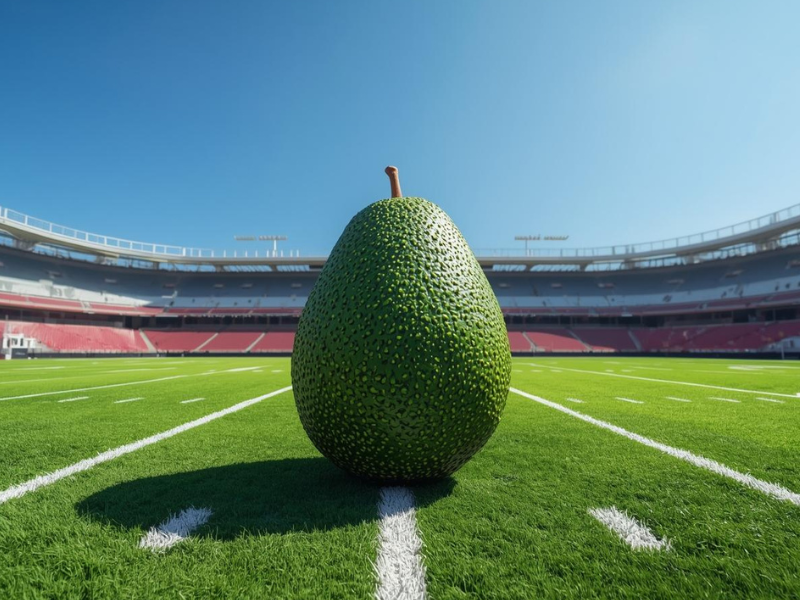
Between 5 and 31 January, Mexico exported 127,000 tonnes of avocados to the United States, up from 114,000 tonnes shipped during the same period in 2025, according to data from the Association of Avocado Producers and Exporting Packers of Mexico. The growth confirms the strong link between avocado consumption — particularly in the form of guacamole — and the Super Bowl, which has become a true showcase for the so-called “green gold”.
Currently, nine out of ten avocados consumed in the United States come from Mexico, a dominance largely supported by production in Michoacán, which accounts for 88% of shipments, and Jalisco, which contributes the remaining 12%.
From Jalisco, José Olivares, director of the Association of Avocado Export Producers of the state, told EFE that exports increased by 35% compared to 2025, reaching 9,700 tonnes. According to Olivares, this growth is linked to the expansion of high-yield orchards and greater technological development in production.
“We have orchards yielding more than 28 tonnes per hectare. Beyond certification, increased technification is enabling us to produce fruit of excellent export quality, and we must take advantage of the market,” he said.
Despite strong export volumes, the sector is facing a profitability crisis marked by falling farmgate prices. Export prices have ranged for months between 17 and 19 pesos per kilo (around one dollar), with occasional peaks of 20 pesos — levels not seen in nearly a decade.
RELATED NEWS: Mexico: year-round domestic avocado production
“Profit margins have been significantly reduced. In previous years, selling at 35 pesos per kilo meant close to 100% profitability. Today, with current prices, the situation is difficult,” the industry representative acknowledged.
This downward pressure is partly explained by economic instability in the United States, the main destination for Mexican avocados, but also by growing international competition, particularly from Colombia, Peru and Chile, which are increasing their presence in the North American market.
“When the market becomes saturated, prices fall. We understand that the supply and demand dynamic is impacting prices, which have not recovered for more than half a year,” Olivares noted.
Even so, avocados remain strategically important within Mexican agriculture. In 2024, they ranked as the country’s second most valuable agricultural product, behind only maize. And as the Super Bowl continues to expand as both a sporting and cultural phenomenon — this year featuring singer Bad Bunny at the halftime show — Mexican avocados remain an essential ingredient both on and off the field.