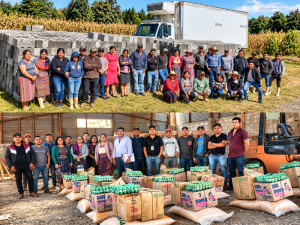










For Rio Blanco, the season started on time in Copiapó, Chile. However, the timing compared to last year varies depending on the growing region and variety. “We are seeing that the IV Region is a bit delayed by maybe three to five days,” says Damm, adding that Chile generally ships table grapes until early to mid-May on exports. “Coming into Aconcagua, it is on the early side by three to seven days. However it’s been very warm in Chile so the temperatures may speed up the harvest.”
Varietal notes
Right now, the company is harvesting the Cotton Candy, Sweet Celebration, Ivory varieties and it will soon start with Sweet Globes. In the IV region, it is also harvesting the Arra Sweeties and Candy Heart variety. This is also its first week in Aconcagua, its biggest growing area, and volumes are expected to increase in the next two or three weeks.
This all follows good growing conditions in Chile for table grapes with a mild spring. Those conditions are leaving fruit sizing slightly larger and that may ultimately produce more yields, though that could change with the heat wave. “In general we’re seeing really good grapes with more volumes on these varieties but also particularly bigger sizing on Sweet Globes and Autumncrisp. They also have really good quality and flavor as do Cotton Candy and Candy Hearts,” Damm adds.
Looking ahead on demand
As for demand, it was expected to be tighter going into the season. “There are Peruvian volumes affecting the market with a bit of an oversupply. However, California finished the season a bit earlier due to some rains which gave Peru a bigger window in the early part of the season,” Damm says, noting that Peruvian grapes have eaten very well and are in good condition which bodes well for the table grape market overall. “Programs are in place and luckily there’s no risk of port strikes like we had last season. That affected the movement of the fruit last year.”
RELATED NEWS: Chile and India strengthen fruit and post-harvest ties through 2027
Also helping movement is the fact that Chilean shippers are paying closer attention to pack outs regarding quality, sizing of fruit and more. “We think we can compete with the Peruvians. Hopefully retailers aren’t origin specific and will take Chilean or Peruvian as long as the specs have been met,” says Damm.
All of this has left pricing fair on fruit that is moving well. “Most of the Chilean grapes arrive in the market in February and March and we hope prices don’t drop too much,” he says. “What we didn’t have last year was the 10 percent tariff into the U.S. which will impact results. That 10 percent will definitely affect the grower.”