




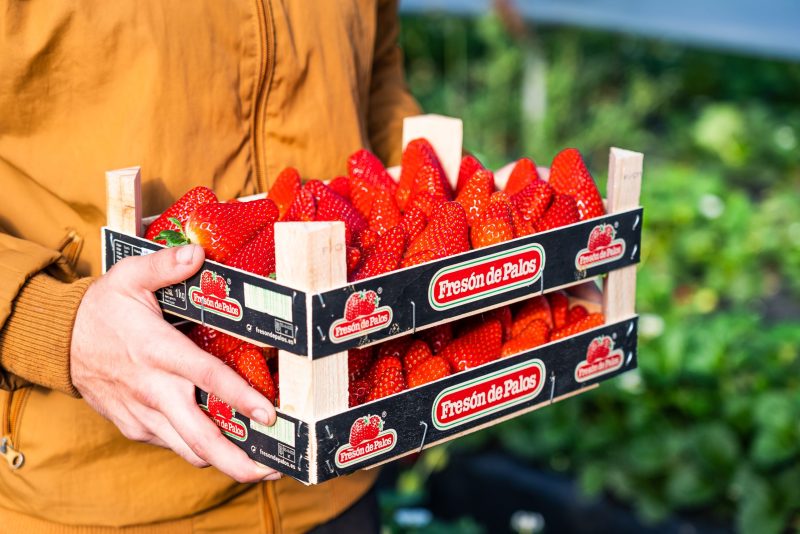
Fruit Today magazine spoke with Silvia Gómez, General Manager of Fresón de Palos, to discuss the key issues of this campaign and understand how the cooperative addresses its customers’ needs.
What are the cooperative’s prospects for this newly started campaign? How did the Christmas season unfold in the markets, and how is January starting?
With the start of the 2024-25 campaign, at Fresón de Palos, we are preparing for a new production cycle with 70 million high-quality plants cultivated in our nurseries in Ávila and Segovia. These were planted in early October on our partners’ farms, covering 900 hectares out of a total 1,300 hectares.
The start of the campaign is very promising, with extraordinary quality in our strawberries. We expect it to proceed smoothly, reaching the production peak in spring as usual, and extending the campaign until early June.
What are Fresón de Palos’ main markets, and how does export distribution break down by country?
Germany is our second-largest market, just behind Spain, followed by Italy, Poland, and France. These markets highly value and demand not only the quality of our fruit but also the sustainability standards, efficiency, and environmental care practices that our partners have been implementing for many years.
We are particularly rigorous in guaranteeing the Spanish origin of our strawberries, ensuring that we meet the specific expectations and demands of our consumers.
Among your producers, how is the varietal distribution of strawberries? Which variety is most prevalent?
The varietal diversification of strawberries in Huelva has undergone a significant transformation over the past five years, marked by the gradual decline of the Fortuna variety, which had long been dominant.
Over the last decade, producers and breeders have worked intensively on developing new varieties that offer greater production stability and better meet demands for quality, flavor, and disease resistance. What was once a near-monopoly in varietal terms has evolved into a landscape where four to six different varieties are cultivated, primarily RedSayra and Marisma in our case. Each variety has unique characteristics tailored to different production calendar periods and the diverse needs of customers, consumers, and farmers.
This varietal diversification has enhanced the flexibility and adaptability of cultivation to changing market conditions, although it has also posed significant challenges due to ongoing climatic variations, water scarcity, and soil disinfection issues. Despite these challenges, the focus on more adaptable varieties has helped maintain the strawberry sector’s competitiveness, ensuring a broader and more balanced supply throughout the campaign.
What are the latest developments?
Our next project focuses on further advancing sustainability and digitalization, spanning from our partners’ farms to our clients’ logistics platforms.
In sustainability, the company aims to implement a fully sustainable production process, reducing water and energy usage through advanced technologies like AI while improving efficiency throughout the cultivation process. This also includes using renewable energy in our facilities and adopting circular economy practices to minimize waste and give it new life.
In terms of expansion, the company is working to increase its presence in key international markets, with a particular focus on Europe. Simultaneously, Fresón de Palos is developing new berry varieties to meet the growing demand for convenient and healthy foods.
RELATED NEWS: Sustainable Strawberries, the new line from Fresón de Palos
Additionally, the project includes significant investments in digitalization and artificial intelligence, enabling improvements in traceability, efficiency, and profitability for our partners while optimizing the supply chain to ensure products reach consumers in optimal condition.
The cooperative has consistently invested in impactful promotional campaigns. Where are these efforts headed now?
For years, we have developed a solid marketing strategy that has strengthened the brand and created a direct connection with the end consumer. We have also been promoting healthy lifestyle habits, encouraging fruit consumption among children and fostering physical activity.
We do this in a very unique way, using animated characters like the Smurfs, Minions, and Disney or Marvel characters. This year, we will repeat our campaign with Marvel, as it has been a tremendous success. And what better way to highlight the “superpowers” of red berries than with Marvel characters?