










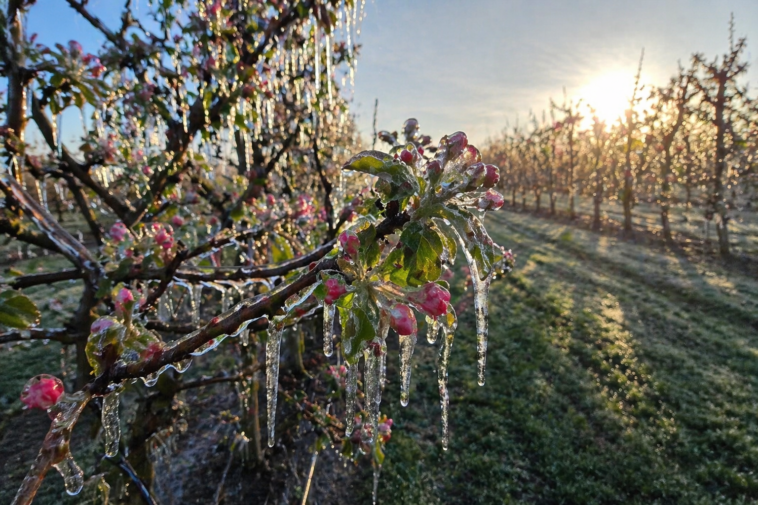
Spring frosts have caused significant damage to fruit orchards in Ukraine, particularly affecting early stone fruit production. According to initial industry estimates, the sweet cherry and apricot harvest could fall by up to 50% as a result of the low temperatures recorded in recent weeks.
The damage has been uneven across the country, although the worst affected areas are located in Transcarpathia, as well as in parts of southern and central Ukraine. In the days leading up to Easter, temperatures dropped to between -5°C and -7°C in some regions, coinciding with a particularly sensitive stage in the development of fruit trees.
Crops weakened after an extreme winter
The impact of the frosts comes on top of an already difficult situation for Ukrainian growers. Orchards had already been weakened by an exceptionally harsh winter, with temperatures in some areas falling to as low as -30°C. This caused stress to the trees and reduced their ability to recover from further cold spells.
Pollination has also become a major concern. Low temperatures limit bee activity, as bees remain largely inactive below 15°C. This compromises fruit set and increases uncertainty over the final crop volume.
In the case of sweet cherries, experts estimate that around half of the crop could still be saved, provided no further frosts occur during May.
Apricots among the most exposed crops
Apricots are among the crops most vulnerable to this weather event. If losses reach close to 80% of national production, consumer prices could rise by between 40% and 60% compared with last season.
RELATED NEWS: Frost severely hits fruit production in Poland
Limited fruit availability will not be the only factor pushing prices up. Rising production costs are also weighing heavily on the sector. Growers must carry out numerous treatments throughout the season to protect their crops, in a context marked by higher prices for fertilisers, fuel and plant protection products.
Higher prices for consumers
Last season, the average price of apricots in supermarkets ranged between 150 and 160 Ukrainian hryvnias per kilogram, while cherries reached around 500 hryvnias per kilogram in markets.
For the new season, the sector expects a baseline increase of between 30% and 50% for cherries, due to both climate risks and the high level of investment required by this type of production.
A campaign marked by uncertainty
The coming weeks will be decisive in determining the final scale of the damage. If no further cold episodes occur, part of the production could still recover, although the crop potential has already been seriously affected.
Ukraine’s situation once again highlights the growing vulnerability of stone fruit production to extreme weather events, in a context in which growers are facing higher costs, climate risks and pressure on profitability.