









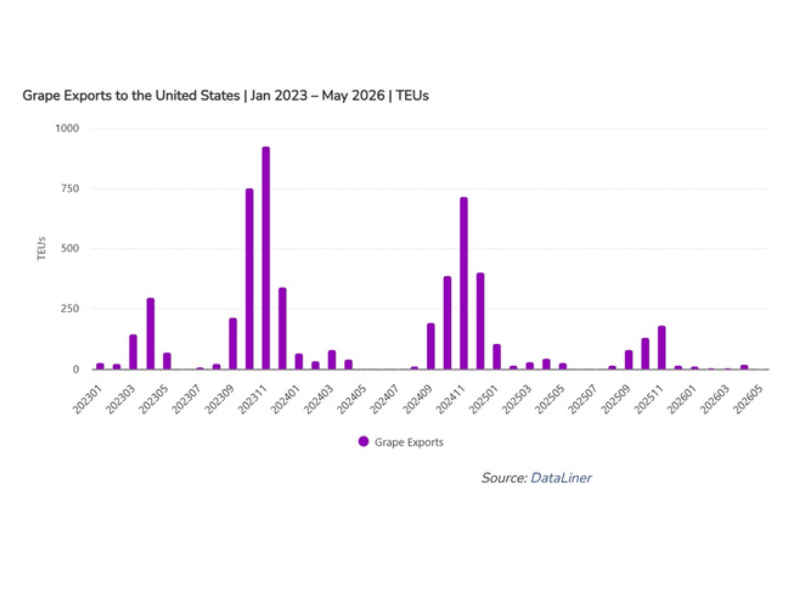
Brazilian grapes will continue to be subject to the new US tariff measures, despite most of the country’s fruit exports to the United States being included in the exemption list.
According to Margarete Boteon, a researcher at the Center for Advanced Studies in Applied Economics (Cepea), the immediate impact on Brazilian fruit exports is expected to be limited, partly because Brazilian grapes had already been losing ground in the US market following an earlier round of tariffs.
“The United States’ share of Brazilian grape exports had already fallen significantly,” Boteon says. “Although the US market provided an important sales window at the beginning of the second half of the year, Europe remains the main destination for Brazilian grapes.”
Exemptions limit the impact on other fruits
The exemptions cover most tropical fruits, citrus products, orange juice and other processed goods, reducing the direct impact of the measure on the wider fresh produce sector.
However, Boteon warns that the industry will need to monitor the final publication of the tariff codes closely, particularly in the case of grapes and other products that remain outside the exemption list.
Total tariff on grapes reaches 35%
The Brazilian Association of Fruit Producers and Exporters (Abrafrutas) says the additional 25% duty brings the total tariff on Brazilian grapes to 35%.
RELATED NEWS: Brazil set for record 60,000-tonne Hass avocado harvest in 2026
Melons and watermelons are also included under the new duties, although Abrafrutas expects the impact to be smaller due to their export volumes and commercial profile.
The association is advising growers and exporters on possible responses, including destination diversification and the adoption of new commercial strategies.
Sharp fall in shipments to the US
Brazil exported approximately US$41.5 million worth of grapes to the United States in 2025, equivalent to around 14,000 metric tonnes.
In the first five months of 2026, Brazil shipped 46 TEUs of grapes to the US market, a fall of 79.6% compared with the same period in 2025.
The figures confirm the reduced weight of the US market for Brazilian grapes and reinforce Europe’s role as the main destination for the country’s exports.