





However, the Spanish market has a particular characteristic: a very significant share of sales is made under private label. This shows that proprietary fruit brands are not the only way to reach consumers, but they are a fundamental tool for creating differentiation and building value throughout the supply chain.
In this respect, sources at Nufresco say that “the major challenge is not to sell more kilos, but to create more value for every kilo produced. Creating value means ensuring that fruit is perceived as a differentiated product, capable of justifying a higher selling price, improving the profitability of the category and distributing that value more evenly across all links in the supply chain.”
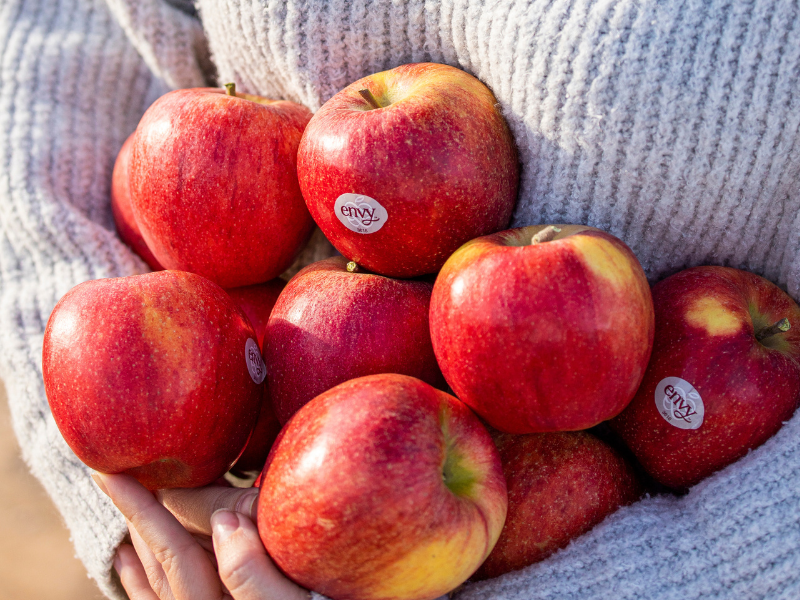
In line with this approach, Nufresco considers it essential to promote branded projects such as Envy™, Opal®, Evelina®, Livinda® and Manzañas. “Brands allow us to communicate attributes such as origin, varietal innovation, consistent quality and the work behind every harvest. They help differentiate the product on the shelf and reduce the pressure to compete solely on price.”
PGI Manzana de Soria
Another project that will contribute to creating value in the coming years is the future Manzana de Soria PGI, which is now in the final stages of approval by the European Union. This recognition will help highlight the distinctive characteristics of a unique production area, shaped by its altitude and particular climatic conditions, which give the fruit its own distinctive character.
This is precisely the mission that inspires Nufresco: to place growers at the heart of the business, give due recognition to their work and build a model in which value creation can guarantee the long-term economic, social and productive sustainability of the fruit sector.
The climate challenge
The new apple season begins against a backdrop of climate challenges and constantly evolving consumer preferences. From a production perspective, the summer has been characterised by low rainfall and prolonged periods of extreme temperatures in the areas where we grow pome fruit. These conditions have favoured plant health, but have resulted in lower production, less intense colour development in some varieties and a significant increase in costs.
Despite this, the commercial outlook is expected to be positive, as the market continues to show a clear trend towards differentiated products. Against this backdrop, brands and premium varieties continue to gain prominence, consolidating their role as a fundamental tool for creating value throughout the supply chain.
Envy™: from premium to aspirational brand
Envy™ remains one of Nufresco’s main strategic priorities and one of the best examples of the transformation taking place in the apple category. In recent years, the brand has pursued an intensive value-building strategy that has enabled it to evolve from a product-focused proposition towards a much more emotional and differentiated positioning.
In the 2025/26 season, Envy achieved its best-ever levels of brand awareness and consideration, exceeding its international targets thanks to a 360-degree communication strategy based on audiovisual media, digital platforms, social media and influencers.
One of the most significant milestones has been its commitment to campaigns that move away from the traditional codes of the fresh produce sector. In recent years, its collaboration with La Isla de las Tentaciones enabled the brand to connect with younger audiences through the concept of “the apple of temptation”. Envy is now embarking on a new phase under the “Reach the Exceptional” platform and the creative concept “House of Exceptional”, a proposition that turns the brand into an inspiring universe where flavour, enjoyment and small everyday moments take on a special meaning.
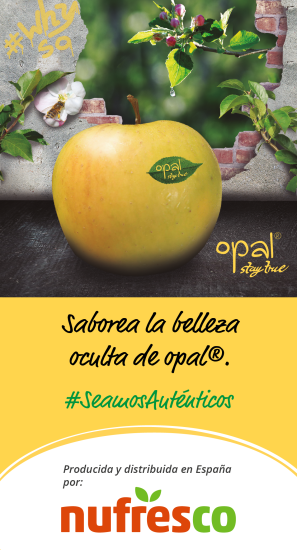
Opal®: the yellow revolution
Opal® continues to consolidate its position as one of the most innovative propositions within the apple category. In a segment traditionally dominated by only a few varieties, it has succeeded in becoming a genuine revolution in yellow apples, bringing differentiation and dynamism to a category that needed new value propositions.
Its commercial development shows that there is still room for growth when consumers are offered a clearly differentiated alternative. In fact, some retail chains have carried out trials marketing Opal® as the only yellow apple on the shelf, achieving very positive results and recording significant increases in category sales.
Another major milestone for the variety has been its ability to guarantee year-round supply, a key factor for modern retail. This continuous availability makes it possible to build stable, long-term commercial programmes and strengthen Opal®’s positioning as a solid proposition within the category.
In a market increasingly focused on differentiation, Opal® demonstrates that innovation also has a place in the most traditional categories and that opportunities remain to create value and attract new consumers.
Evelina®: a strong proposition for the second half of the season
Evelina® has established itself as one of the varieties with the greatest growth potential within Nufresco’s portfolio. Its main strength lies in its excellent fit with the second half of the season, making it possible to maintain an attractive and differentiated offer when other varieties begin to lose prominence on the shelves. This makes it a strategic tool for ensuring continuity, dynamism and profitability within the category.
Its development confirms the market trend towards propositions that combine varietal differentiation, consistency of supply and an identity that consumers can easily recognise.
Manzañas: consolidating value at origin
Following its launch last year, Manzañas continues to consolidate its position as one of Nufresco’s strategic projects for strengthening the connection between growers, retailers and consumers. More than a brand, Manzañas represents a way of understanding fruit production, highlighting origin, traceability and the work of those who grow the fruit.
More and more shoppers are paying attention to where their food comes from and seeking locally grown products, which they associate with greater freshness, sustainability and support for the local economy. However, one of the main challenges remains the clear identification of origin at the point of sale, a factor that influences purchasing decisions.
RELATED NEWS: Europe falls short on apples while Catalonia plays a different hand
Against this backdrop, Manzañas was created and continues to grow with the aim of providing consumers with a clear and recognisable proposition, making it easier to identify Spanish-grown apples and conveying values of quality, transparency and commitment to the local area.
Livinda always adds value
If there is one brand that represents the evolution of the apple category in Spain, it is Livinda. Launched more than a decade ago, it was one of the pioneers in demonstrating that apples could be marketed with their own distinctive identity, recognisable to consumers.
Over the years, Livinda has succeeded in consolidating a strong market position thanks to a proposition based on quality, consistency and trust. Its track record reflects a trend that has now become a reality in the sector: customers no longer choose only a variety, but also a brand that gives them confidence and delivers a consistent experience purchase after purchase.
Its consolidation demonstrates that brand building is a long-term strategy and that brands capable of generating trust retain their value even in an increasingly dynamic and segmented market.
Against a backdrop of varietal innovation and the growth of club varieties, Livinda remains a clear example of how a well-positioned brand can coexist with new propositions and continue to be a reference for consumers and retailers. Its success confirms that the future of the category lies not only in developing new varieties, but also in continuing to build strong brands that bring value and differentiation to the entire supply chain.