








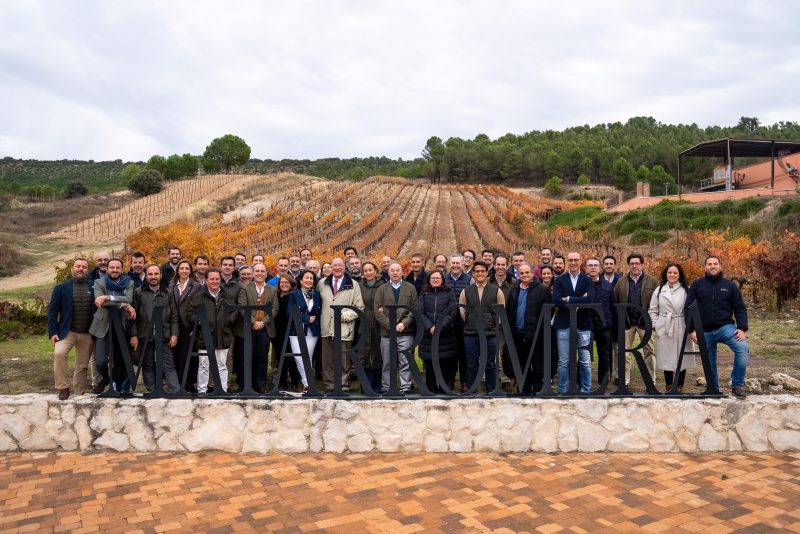
CIMA is made up of benchmark companies committed to a transition towards more efficient, regenerative and data-driven agriculture, under the shared values that define this business cluster of science, innovation, environment and agriculture. This project seeks to accelerate the adoption of agricultural practices that increase productivity while preserving natural resources through applied science.
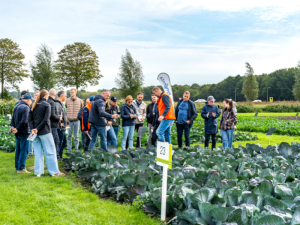
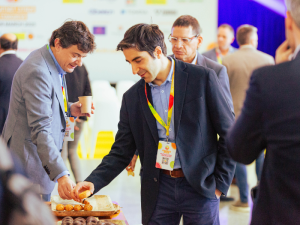
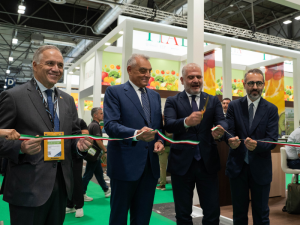
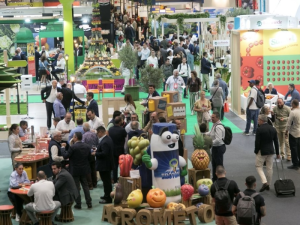
Over a two-day programme, attendees participated in a full schedule combining technical knowledge with practical experience.
The session began with a message from Spain’s Minister of Agriculture, Fisheries and Food, Luis Planas, expressing his support and recognition for the CIMA project: “Innovation and productivity are key for the future of the Spanish agri-food sector, both in terms of our competitive capacity in open markets and in preserving our position as an agri-food powerhouse.”
This was followed by the welcome remarks of Carlos Moro: “For Bodegas Familiares Matarromera, it is an honour to host the 4th CIMA Convention and contribute to this space of collaboration where leading companies share the same vision of a more sustainable agriculture that cares for the land and guarantees its future for the next generations.”
RELATED NEWS: Alltech Crop Science hosts the 3rd CIMA Convention
Research Professor CEBAS-CSIC AD HONOREM Carlos García Izquierdo, an international reference in soil science and soil health, delivered a presentation based on his research on the importance of measuring and understanding soil biological activity before making agronomic decisions.
García Izquierdo explained how enzymatic analysis makes it possible to understand real fertility potential, while molecular detection (PCR) is key to identifying pathogens early, allowing a shift from reactive agriculture to preventive soil management. “What is not measured cannot be managed,” he emphasised.
The day continued with the latest advances and results of the CIMA project, presented by the teams of Alltech Crop Science and Ideagro. The project has enabled the collection and analysis of more than 9,200 samples from more than 18 crops across 31,500 ha, with 908 sampling points distributed across different agricultural regions of Spain and Portugal.
Event concluded with a panel of experts featuring Jerónimo García of Moyca, José Antonio Alconchel of Alcoaxarquia and Carlos Moro of Bodegas Familiares Matarromera.