









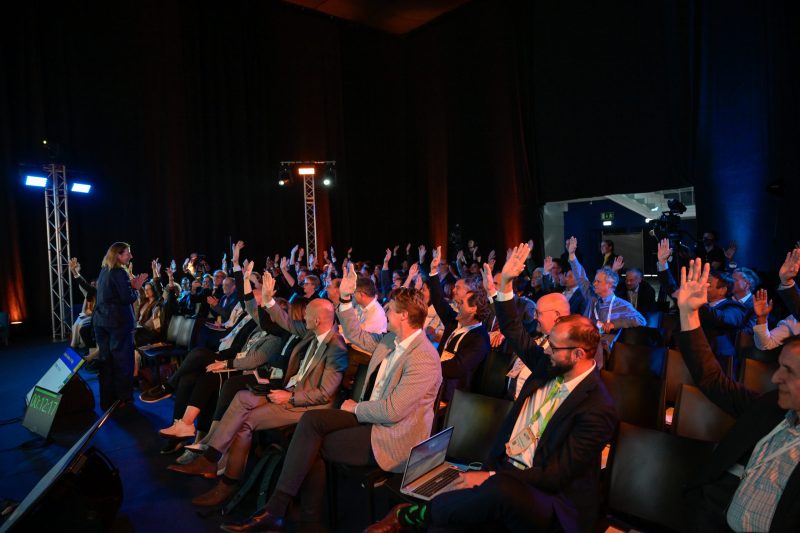
The International Seed Federation (ISF) has launched a new practical guide aimed at strengthening social rights and ethical practices in seed production. Titled “A Practical Guide for Seed Production: Navigating Social Rights and Ethical Practices in the Seed Sector”, the document was officially launched on 20 May during the ISF World Seed Congress 2026 in Lisbon.
The initiative seeks to provide the seed sector with a voluntary, practical and pre-competitive tool to help companies, suppliers, growers, associations and other value chain stakeholders advance the implementation of responsible labour practices.
A voluntary and practical framework
The guide has been designed as a practical resource to support the implementation of responsible labour practices and help the sector align with international social recommendations and standards.
ISF recognises that many companies and organisations already have robust social compliance and responsible sourcing programmes in place. For this reason, the document is not intended to replace existing tools, but to complement them.
Its approach focuses particularly on awareness-raising, capacity building and continuous improvement, including for organisations that are still developing their internal capabilities in social responsibility.
“Seed production depends on people — farmers, workers, partners, and communities. Their rights, dignity, and well-being are fundamental to a resilient and responsible seed sector,” said Michael Keller, Secretary General of ISF.
Labour rights, safety and responsible sourcing
The document is grounded in internationally recognised frameworks, including the Ethical Trading Initiative Base Code, the OECD Due Diligence Guidance for Responsible Business Conduct, the UN Guiding Principles on Business and Human Rights and the core conventions of the International Labour Organization.
The guide covers 12 core areas considered central to responsible seed production. These include fair employment practices, forced and child labour, health and safety, legal compensation and benefits, working hours, non-discrimination, grievance mechanisms, responsible sourcing and supplier engagement, freedom of association, respect for Indigenous Peoples and local communities, and environmental protection.
One of the document’s key features is its inclusive scope. It is intended for different actors across the seed value chain, from large seed companies to smallholder growers and seasonal workers. ISF encourages companies and suppliers to apply the principles according to their context, capacity and level of social compliance maturity.
From commitments to daily action
According to Ben Rivoire, ISF Director for Sustainability and Crop Value Chain Engagement, the guide aims to go beyond general commitments. Its value lies in providing concrete examples of how to translate social responsibility into day-to-day operations, including practical dos and don’ts.
The approach responds to a central idea: improving social conditions in seed production requires awareness, training and collaboration across the different links of the value chain.
A collaborative sector-wide initiative
The guide was developed through a collaborative process involving member companies, national and regional seed associations and non-governmental organisations.
Participating companies include BASF Nunhems, Bayer, Bayannaoer Guanr Agricultural Development Co Ltd, East-West Seed, Bejo Seeds, Semillas Fitó and Syngenta. Associations such as ASTA, ANOVE, Seeds Canada, APSA, Plantum and UFS also contributed, alongside NGOs including Arisa and Solidaridad.
RELATED NEWS: World Seed Congress closes with record participation and historic ISF leadership milestone
The companies involved have highlighted a shared message: the need to move forward in a coordinated way. Bas Gorissen, Global Sustainability Manager at BASF | Nunhems, underlined that social responsibility must become part of everyday business. Janina Lukas, Head of Ethics and Social Impact at Bayer, noted that the guidelines help create a common language across regions, operations and cultures.
Christine Jong, Head of People, Culture and Organization at Bejo, also stressed that vegetable seed production is labour-intensive and takes place in rural communities, making fair working conditions, safe workplaces and respect for human rights essential.
Semillas Fitó and Syngenta among the companies involved
The participation of Semillas Fitó reinforces the Spanish presence in this global initiative. Elisabeta Fitó, Corporate Director of the company, said that seeds are “the beginning of everything: crops, food and the future”, and highlighted that the guidelines allow the sector to move forward responsibly, pragmatically and collaboratively.
Syngenta has also played an active role in the process. Jason Allerding, Head of Sustainability, Health, Safety and Risk Management at Syngenta and Chair of ISF’s Coordination Group on Environmental and Social Responsibility, stressed that systemic change in labour practices requires collaboration across the sector.
A roadmap for a more resilient sector
With this guide, ISF aims to turn shared principles into practical tools and reinforce the federation’s role as a pre-competitive collaboration platform for companies of all sizes.
The full document and e-learning course are available on the ISF website from 20 May. The initiative marks a further step in the social agenda of the seed sector, at a time when sustainability is no longer limited to genetic innovation or environmental impact, but also includes working conditions, business ethics and responsibility across the entire value chain.