









By 2026, national production of blueberries, raspberries, blackberries and strawberries is expected to reach 1.2 million tonnes, representing a 4% increase compared to 2025, driven by investments in genetics, adoption of modern technologies and adjustments in harvest windows targeting premium markets.
According to a report prepared by the United States Department of Agriculture (USDA) from its office in Guadalajara, the country will maintain its position as the leading supplier of fresh berries to the United States in 2026.
Mexican berry production is mainly concentrated in two major production windows: late winter and spring (January to June) and late autumn (November and December), while summer records the lowest supply period of the year.
In addition, factors such as water availability and weather conditions remain key for the sector. The drought recorded during 2024 and early 2025 affected some production areas in the north and northwest of the country, although rainfall since mid-2025 has improved reservoir levels and eased pressure on water supply.
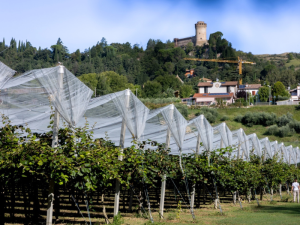
In response to these challenges, producers continue investing in efficient irrigation, protected crops and drought-tolerant varieties, with the aim of maintaining yields and reducing climate-related risks.
Strawberries continue to lead berry production
Strawberries remain the main berry produced in Mexico, accounting for 54% of total volume. For 2026, production is projected at 621,450 tonnes, an increase of 2% compared to the previous year.
Around 60% of production is destined for export, while domestic consumption and the processing industry show sustained growth.
The main production areas are concentrated in the states of Michoacán, Baja California and Guanajuato, with Michoacán accounting for more than 60% of national output.
Blackberries continue to expand
Blackberry production is expected to reach 274,000 tonnes in 2026, representing a 3% increase, driven by strong international demand and optimisation of cultivation practices.
The sector is also undergoing a significant varietal transition, with the gradual replacement of the traditional Tupi variety by newer, more productive and better-flavoured varieties such as Erandy, Sultana and Victoria.
Currently, around 50% of blackberry production is exported, mainly to the US market.
Raspberries boosted by new varieties
Raspberries are set to be one of the fastest-growing berries in 2026, with projected production of 194,000 tonnes, an increase of 7%.
This growth is driven by the adoption of new varieties and production technologies, including substrate cultivation and macro-tunnel systems that improve yields and quality.
Around 80% of raspberry production is destined for international markets, consolidating its export role within the sector.
RELATED NEWS: Mercosur, a scenario still wide open
Blueberries adjust strategy in response to Peru
The blueberry segment is expected to post the highest percentage growth in the sector. By 2026, production is forecast to reach 85,000 tonnes, representing a 16% increase compared to 2025.
The sector has adjusted its production strategy to avoid direct competition with Peruvian supply, shifting its production window towards spring (February to May) to benefit from better prices in international markets.
In addition, producers are replacing traditional varieties such as Biloxi with new higher-yield genetics, including Sekoya Pop, AzraBlue and Madeira, which offer larger fruit and greater firmness.
Exports will continue to be led by the United States
Mexican berry exports are expected to reach 715,000 tonnes in 2026, a 2% increase compared to the previous year. Around 80% of these shipments will be destined for the US market.
In 2025, exports totalled 700,500 tonnes, although total value fell to US$3.4 billion, affected by a price war in the blueberry market against Peruvian supply.
Despite this, Mexico continues to strengthen its position in international trade and diversify markets beyond North America.
Domestic consumption also on the rise
Berry consumption in Mexico is also showing an upward trend. By 2026, consumption is projected at 499,450 tonnes, driven by sector promotion campaigns and growing consumer interest in healthy foods.
Strawberries lead domestic consumption with 2.4 kg per capita, followed by blackberries. Meanwhile, raspberries and blueberries remain positioned as premium products within the domestic market.