








The European Commission has launched the EU Fertilisers Value Chain Partnership, a new framework for structured dialogue between farmers, fertiliser producers, Member States and other stakeholders across the value chain.
The initiative, announced as part of the Commission’s Fertiliser Action Plan, aims to improve cooperation between policymakers and industry while addressing some of the main challenges affecting fertiliser availability, affordability and supply security in the European agricultural sector.
This partnership will focus on three main objectives: ensuring the availability and affordability of EU-produced fertilisers, improving predictability for producers and users, and supporting the decarbonisation of the fertiliser industry together with more sustainable nutrient management on farms.
Reducing Europe’s dependence on fertiliser imports
The Commission considers the partnership an important instrument for strengthening the resilience of the European fertiliser value chain. Geopolitical disruptions and supply constraints have exposed structural vulnerabilities in the EU market and contributed to significant increases in fertiliser prices, putting additional pressure on farmers.
Against this backdrop, the partnership will examine barriers affecting the availability and affordability of domestically produced fertilisers, while also encouraging more efficient nutrient use and exploring ways to reduce the EU’s dependence on imports.
The initiative is also linked to the Commission’s broader objective of reinforcing European strategic autonomy in fertiliser supply. The Fertiliser Action Plan includes measures to strengthen domestic production, diversify supply sources and support the development of low-carbon, circular and bio-based fertilisers.
Greater predictability for farmers and industry
One of the main challenges identified by the Commission is the lack of predictability faced by both sides of the fertiliser market.
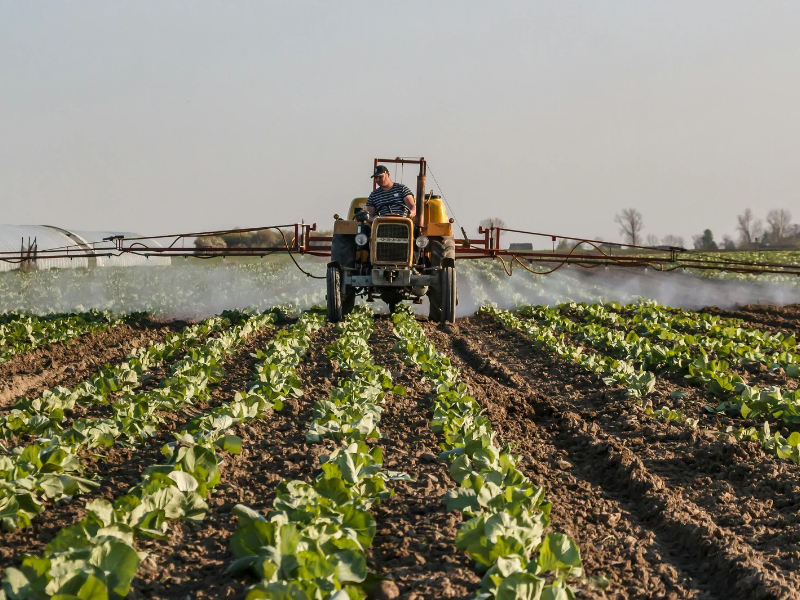
For farmers, reliable access to fertilisers at affordable prices is essential for maintaining production and yield stability. Producers, meanwhile, need greater visibility over demand, investment conditions and future market developments.
The new partnership will therefore provide a regular forum for stakeholders to exchange information, identify remaining barriers and discuss possible policy responses. It will also encourage voluntary commitments between members aimed at improving cooperation throughout the value chain.
A broader strategy for more efficient fertiliser use
The partnership forms part of the wider Fertiliser Action Plan adopted by the European Commission on 19 May 2026. The plan combines short-term measures to address affordability and supply pressures with longer-term actions designed to transform the European fertiliser market.
Among its priorities are improving nutrient-use efficiency, encouraging the uptake of organic and bio-based fertilisers, supporting nutrient recycling and developing low-carbon alternatives to conventional fertilisers.
RELATED NEWS: EU mobilises €540m for farmers hit by fertiliser crisis
The Commission also intends to strengthen transparency in the fertiliser market through improved reporting and the Fertilisers Market Observatory, while assessing options such as strategic stocks and joint procurement mechanisms to increase resilience and reduce exposure to supply shocks.
€540 million in emergency support for farmers
Alongside the structural measures, the Commission has mobilised €540 million in financial support for farmers affected by higher fertiliser and energy costs linked to the geopolitical crisis.
Member States can complement the EU support with national funding of up to 200%. The funds are intended to compensate the farmers most affected by increased on-farm fertiliser and energy costs, with national allocations targeted according to the impact on different sectors and products.
For Spain, the EU allocation amounts to €50.17 million, while France has been allocated €107.12 million, Poland €66.63 million and Germany €60.26 million, among the largest national envelopes.
Industry and farmers at the centre of the transition
With the launch of the partnership, the Commission is seeking to move towards a more coordinated approach to fertiliser policy, bringing together the different parts of the value chain rather than addressing supply, production and farm demand separately.
The initiative will provide a platform to identify obstacles affecting the sector and explore solutions that can improve supply security, competitiveness, affordability and sustainability.
For European agriculture, the challenge is therefore not only to ensure sufficient fertiliser supplies, but also to create a more resilient value chain capable of responding to geopolitical disruptions while accelerating the transition towards more efficient and sustainable nutrient management.