








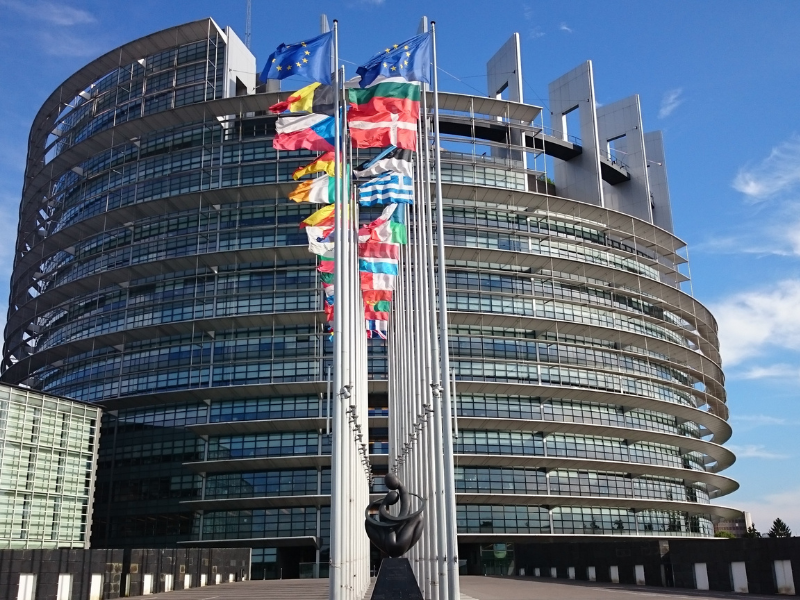
EU Member States have approved the European Commission’s proposal to mobilise €540 million in extraordinary aid for farmers affected by the fertiliser and energy crisis linked to the situation in the Middle East.
The financial support is designed to provide liquidity to producers facing a sharp increase in input costs, particularly fertilisers and energy, and to ensure they can prepare for the next sowing season amid high uncertainty. The measure is part of the immediate actions included in the Action Plan on Fertilisers, adopted by the Commission on 19 May 2026.
Support targeted at the most affected farmers
Under the distribution by Member State, Spain will receive €50.17 million, placing it among the countries with the largest allocations, behind France, Poland and Germany. France will receive €107.1 million, Poland €66.6 million and Germany €60.2 million.
The European Commission has explained that Member States must use the allocated amounts to compensate farmers most affected by the economic losses linked to rising fertiliser and energy costs on farms, with particular attention to the sectors and products most severely impacted.
Objective criteria and national top-ups
Aid must be granted on the basis of objective and non-discriminatory criteria, avoiding distortions of the market or competition and ensuring that no overcompensation takes place.
Member States will also be able to complement this EU support with national funds of up to 200% of the amount allocated. To ensure the measure is effective, the Commission establishes that farmers must receive the financial support before 28 February 2027.
A measure to ease pressure on farms
Brussels frames this aid within the need to stabilise the situation of European farmers, who are facing liquidity problems as a result of higher input costs. The Commission warns that, ahead of the sowing season linked to the 2027 harvest, many producers will have to make decisions in a complex economic environment.
RELATED NEWS: Spain activates plan to reduce external dependence on fertilisers
The emergency package therefore seeks to provide exceptional and targeted support to the farms most affected, with the aim of easing financial pressure, sustaining agricultural production and reinforcing European food security at a time marked by volatility in energy and fertiliser markets.
FAQs on fertiliser aid in Spain
How much will a farmer receive under the fertiliser aid scheme?
The maximum amount will be €38.33 per hectare of rainfed land and €92.50 per hectare of irrigated land, with a limit of 300 hectares per beneficiary.
Is it necessary to submit an application?
There is no conventional application procedure because the process is initiated automatically, but the beneficiary must expressly accept the aid through the FEGA electronic form.
What happens if the aid is not accepted within the established deadline?
Failure to expressly accept the aid will be understood as a waiver, meaning the farmer will not receive the payment.
Are invoices dated before 1 March 2026 valid?
No. Only invoices issued between 1 March and 31 December 2026 will be accepted, even if previous purchases were intended for the current campaign.
Can fertilisers be purchased for the 2026-2027 campaign?
Yes. Autumn and winter purchases intended for the following campaign will be valid provided they are made before 31 December 2026 and are used for the beneficiary’s holding.
Can invoices be issued in the name of a relative or tenant?
No. Invoices must be issued in the name of the beneficiary included in the lists, unless there has been an official change of ownership approved by the Administration.
How long must invoices be kept?
Invoices must be kept for ten years from the date the aid is granted and made available to the Administration when required.
Can young farmers who joined the sector in 2026 receive the aid?
Young farmers incorporated in 2026 without eligible area declared in the 2025 CAP are excluded, even if they purchased fertilisers during the eligible period.
What happens if a farm increased its surface area in 2026?
The increase in surface area will not raise the amount of aid, because the calculation is based on the area declared in the 2025 CAP or registered on the corresponding reference date.
Can a farmer whose land is currently leased accept the aid?
The aid should not be accepted when the farmer no longer manages the plots or bears the fertilisation costs. Changes in farm operator will be resolved through an administrative appeal.