








With proactive responses to increasing environmental challenges, Fyffes has met and exceeded many of its sustainability goals.
Fyffes has advanced responsible water management, ensuring that 100% of its operations are covered by a certified water management plan.
In terms of packaging, 99.6% is now recyclable, reusable, or compostable. Fyffes has also met its food loss reduction target by reusing 80% of post-harvest food waste.
Fyffes has far exceeded its goal of donating five million healthy meals to vulnerable communities, reaching more than 27 million meals to date. Achieving this goal is especially significant in the current global cost-of-living crisis, where demand for food banks has risen exponentially.
Committed to fighting climate change
Fyffes takes a proactive approach to climate change. Last year, the company carried out a comprehensive and independent climate risk assessment to better understand the current and future impacts of climate change in its growing regions.
This assessment confirmed Fyffes’ experience that its own farms, as well as those of its producers, are already facing some of the most severe effects of climate change, such as more frequent tropical storms, increased rainfall and heat, and a rise in pests and fungal outbreaks. Fyffes is responding proactively by investing in innovative mitigation and resilience measures.
Fyffes reduced its Scope 1 and 2 emissions per kg of harvested fruit in CO2 eq. by 12.05%, thanks to initiatives such as switching to lower-nitrogen fertilizers and modernizing its agrochemical application equipment. The company is determined to meet its greenhouse gas reduction target for Scopes 1 and 2, supported by the Science Based Targets initiative (SBTi).
Fyffes has also provided 100% of its employees with human rights training and has introduced human rights training for suppliers. The producer has conducted independent human rights impact assessments at supplier facilities in Costa Rica and at Fyffes-owned farms in Belize.
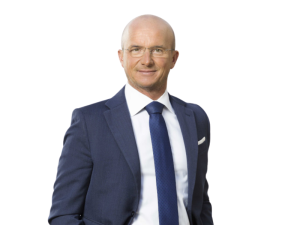
At today’s presentation of the report, CEO Helge Sparsoe stated:
“In a time of great global uncertainty, and with climate change severely affecting growing conditions, I am very proud of what our team has achieved through innovative approaches and lateral thinking. We are at the forefront of sustainability in our sector, always prepared to meet current and future customer requirements for sustainable and ethical supply chains. Despite these challenges and growing regulatory divergence in sustainability policy across consumer markets, we remain committed to ‘shaping well-being for the world’—both for people and the planet.”
The current sustainability goals, covering the decade 2020–2030, were conceived in 2019/2020, when the integration of sustainable and ethical performance into all of Fyffes’ activities was established as a core value and strategy.
RELATED NEWS: Fyffes guarantees fruit supply amid global challenges
The latest report, covering activity in 2023/2024, reflects what Helge Sparsoe describes as “a crucial year for Fyffes, marking the halfway point of the United Nations’ Sustainable Development Goals, our 2030 Sustainability Strategy, and our corporate strategy.”
Fyffes has been shortlisted for the Reuters SDG Pioneer Award and the UK Fresh Awards Sustainability Supply Chain Award.