









Unusually low temperatures recorded at the end of March across several areas of the Valencian Community have caused significant damage to multiple crops at a particularly sensitive stage of development. According to La Unió Llauradora, initial estimates place economic losses at close to €4 million.
The cold spell, which occurred between the nights of March 28 and 30, affected approximately 1,200 hectares, with the most severe impact reported in regions such as Vall d’Albaida, La Costera and Ribera Alta. Isolated damage has also been detected in other production areas.
Crops at a critical stage
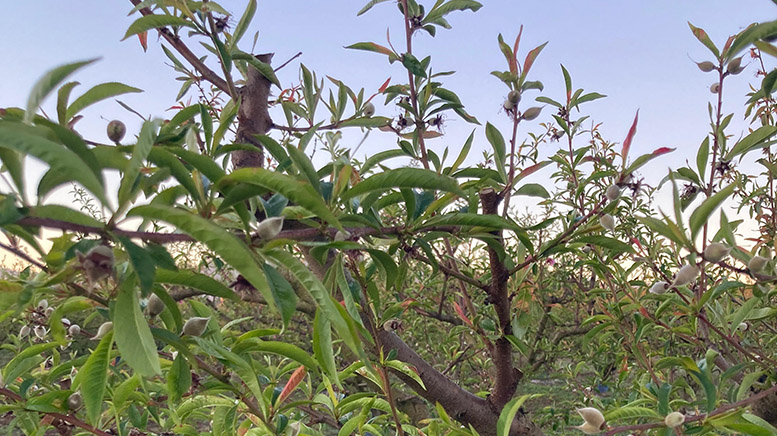
The most affected crops include persimmon, summer fruit trees—such as apricot, peach and plum—and almonds. The impact has been particularly severe due to the phenological stage of the crops, which were in full bloom or at the flower bud development phase.
At this stage, plants are highly vulnerable to temperature drops, as young tissues are especially sensitive to cold stress. Initial field assessments indicate direct damage to flowers and shoots, which could lead to reduced fruit set and, ultimately, lower yields.
An off-season weather event
Sector representatives stress that this was not a typical winter frost, but rather a late-season event occurring outside the usual climatic calendar. These increasingly frequent anomalies are adding uncertainty to crop planning and complicating risk management for growers.
While the full extent of the damage will depend on how crops evolve in the coming weeks, early indications already point to a significant impact on the upcoming harvest in the affected areas.
Calls for support measures
In response, La Unió Llauradora has announced it will request maximum efficiency from Agroseguro in the assessment process, aiming to speed up compensation payments to farmers.
RELATED NEWS: Severe damage in the Valencian Community and Almería after Storm Oriana
The organisation is also calling on the regional government to implement direct support measures. Proposed actions include tax relief on rural property (IBI), reductions in social security contributions for self-employed farmers, and adjustments to taxable income indices.
In addition, preferential credit lines have been proposed to help producers cope with losses and ensure the continuity of affected farms.
A growing challenge for the sector
This latest episode highlights the need to adapt agricultural policies and risk management tools to an increasingly variable climate. The recurrence of extreme weather events outside their traditional seasonal patterns poses additional challenges for the sector, which will need to strengthen both agronomic strategies and risk coverage mechanisms moving forward.