






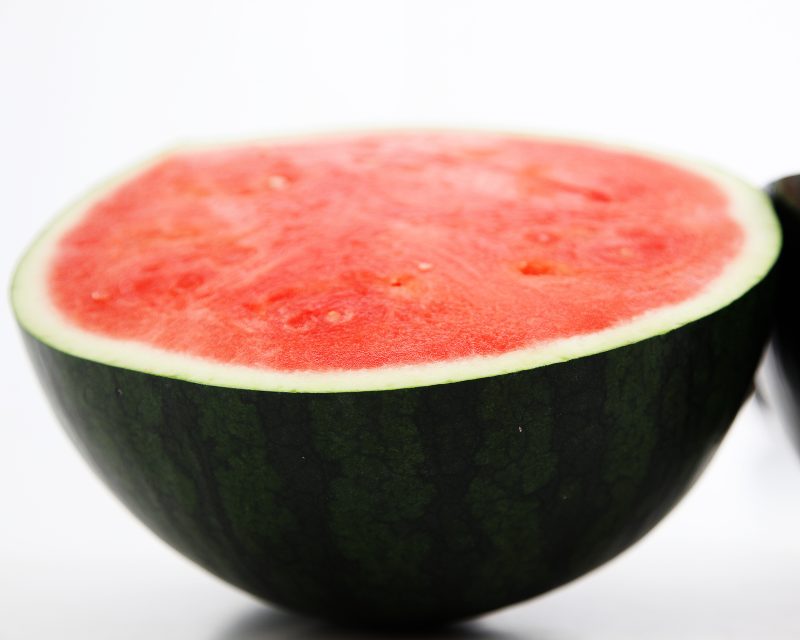
This year, spring has arrived late. A series of storms, low temperatures and strong winds have affected crop cycles from the very beginning of the watermelon and melon campaign.
Compared to usual timings, transplanting has been delayed by between 15 and 30 days in watermelon-growing areas such as western Almería and Seville.
Despite challenging weather conditions, surface forecasts point to significant growth compared to the previous campaign, although estimates vary depending on the source.
Initial projections from ASAJA Almería, based on data from associated nurseries, indicated in February a 9% increase in watermelon area, rising from 8,520 to 9,266 hectares. According to the organisation, eastern Almería leads this growth with a 10% increase (up to 7,029 hectares), while western Almería is expected to grow by 5% (2,237 hectares).
For melon, the projected increase is 4% in western Almería, reaching 2,662 hectares. Open-field watermelon area is expected to remain similar to last year at around 2,750 hectares, with a slight decrease in Castilla-La Mancha.
RELATED NEWS: Almería reports positive results for the 2024/25 vegetable season
By late March, COAG Almería raised these figures further. Its provincial secretary, Andrés Góngora, placed watermelon area above 10,000 hectares, compared to 9,100 hectares the previous season, and melon area at around 3,000 hectares (up from 2,400–2,500).
According to Góngora, the increase could reach 20% in watermelon, exceeding initial forecasts. The reason lies in a “difficult” autumn-winter period: growers who had opted for long cycles have pulled crops earlier and shifted to watermelon as an alternative. Viral diseases in zucchini and downy mildew in cucumber and tomato have accelerated these changes.
Seed companies indicate that eastern Almería has advanced transplanting and increased surface in early cycles, while western areas have maintained previous crops longer, leading to a rebound in mid and late cycles—reflecting different climatic behaviours.
However, the shift towards mid and late cycles has not been without challenges. Early plantings have shown difficulties in fruit set due to weather conditions and pollinator performance.
According to sector sources, significant volumes are not expected at the beginning of the campaign, although the situation should normalise from May onwards.
Varietal trends
In watermelon, Red Jasper remains the leading reference in white seedless types, while Fashion dominates the black seedless segment. The domestic market continues to demand large fruit sizes—starting from five kilos—a trend that has remained strong since the widespread adoption of portioned sales in supermarkets.
In melon, the trend confirms the decline of Galia and Cantaloupe in Almería, in favour of yellow melon and piel de sapo. COAG highlights the “growing interest in yellow melon, especially in organic production, where it is practically the only type demanded”, with active markets in Germany, Switzerland and Belgium.
According to Andrés Góngora, new varieties have improved both quality and resistance, particularly against issues such as aphids.
Consumption: volume recovery, margin pressure
From a historical perspective, combined melon and watermelon consumption has shown a downward trend since 2014, when it was close to 17 kg per capita, compared to around 14 kg today.
Supermarkets remain the main sales channel, accounting for 54.5% of purchases, followed by traditional stores (23.3%). The regions with the highest consumption are Extremadura, Castilla-La Mancha and Castilla y León, according to data from the MAPA Food Consumption Panel over the past decade.
However, last campaign showed a positive trend. Between June 2024 and May 2025, Spanish households consumed 663.5 million kilos of melon and watermelon, an increase of 8.6% year-on-year.
The average price dropped to €1.20/kg (-6.4%), acting as a driver for this recovery in volume.
The sector generated nearly €793 million in turnover, up 1.6%. Per capita consumption reached 14.16 kg per person per year (+7.9%), although per capita expenditure only rose slightly by 0.9% to €16.92.
In other words, higher volumes at lower prices—a dynamic that continues to put pressure on profitability at origin.
Andalusia: export-driven production
In contrast to domestic consumption trends, Andalusian production remains strongly export-oriented: 41% of watermelon production is exported (88% within the EU), while for melon the figure rises to 58%.
In the 2024/25 campaign, Andalusia produced 510,167 tonnes of watermelon across 8,842 hectares, with a value of €320.8 million; and 92,331 tonnes of melon, valued at €65.3 million.