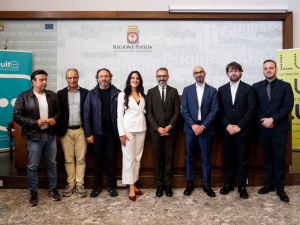






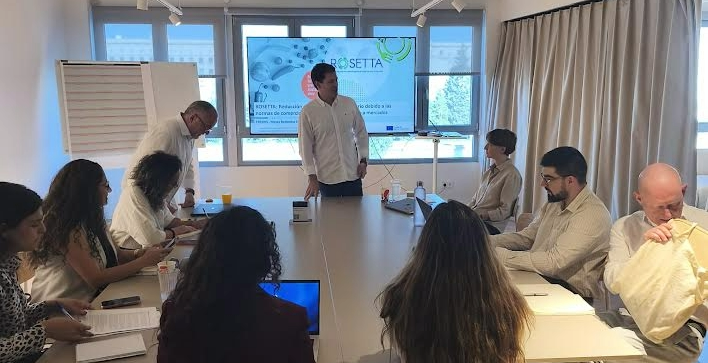
The Spanish regional roundtable, organised by the Spanish partner FRESHIS, aimed to gather policy and business recommendations to prevent food losses and waste across the entire agri-food chain, from production to the final consumer.
The meeting brought together representatives from the Spanish Ministry of Agriculture, Fisheries and Food, FEPEX, ASAJA, Cooperativas Agro-alimentarias and COEXPHAL, alongside private companies and organisations such as Atalaya, Cacao Broma, Kala Dátiles, Isifarmer, Crowdfarming, Food Advisor and Bureau Veritas. Representatives from EUCOFEL, the European Fruit and Vegetable Trade Association, which participates in the European project, also took part.
The impact of commercial standards
ROSETTA analyses how certain commercial standards, particularly those linked to aesthetic criteria, size, shape or product appearance, can contribute to food waste, even when food remains perfectly suitable for consumption.
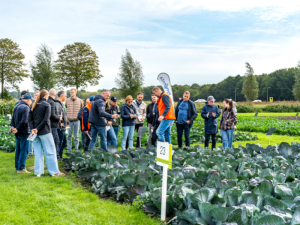
For more than two years, the consortium has carried out pilots in different European countries and sectors, including fruit and vegetables, dairy, meat and cereals, with the aim of identifying practical solutions and developing evidence-based recommendations.
The session held in Madrid made it possible to apply this work to the Spanish context and open a space for dialogue between the different links in the agri-food chain.
A workshop focused on practical solutions
The session was held in a participatory workshop format, with moderated discussions and working groups focused on the main factors behind food losses and waste.
Topics addressed included the impact of cosmetic standards and market practices, the valorisation of out-of-standard products, coordination between different stakeholders in the chain, the role of innovation and digitalisation, the measurement and traceability of food waste, and consumer education and awareness.
One of the main points of consensus during the session was the need to address food waste from a whole-chain perspective. Participants agreed that solutions must involve producers, retailers, the food industry, public administrations and consumers.
Alternative markets and valorisation of imperfect products
The meeting highlighted the importance of developing alternative markets for products that, despite not meeting certain commercial or aesthetic criteria, retain their full quality and suitability for consumption.
RELATED NEWS: 78% of consumers prioritise action against food waste
Participants also discussed models for valorising imperfect products, consumer communication strategies, food processing solutions and digital tools aimed at improving the efficiency and sustainability of the chain.
They also underlined the need to improve alignment between public and private standards, promote harmonised food waste measurement systems and strengthen food education as a way to change purchasing and consumption habits.
Innovation and digitalisation against food waste
Innovation and digitalisation were also central to the debate. Digital tools can help improve traceability, anticipate mismatches between supply and demand, optimise surplus management and facilitate new marketing channels for out-of-standard products.
In this regard, the session showed that reducing food waste does not depend solely on regulatory changes, but also on companies’ ability to adopt new operational, technological and commercial solutions.
Contributions to European recommendations
The conclusions gathered during the Spanish regional roundtable will contribute to the final development of the ROSETTA project’s policy and business recommendations. These proposals will be discussed soon at an international roundtable in Brussels, with the participation of European institutions and stakeholders from different countries.
The organisers highlighted the value of bringing together diverse profiles in the same discussion in order to define practical, realistic and applicable solutions to one of the main challenges facing the European food system.
About ROSETTA
ROSETTA is a project funded by the European Union’s Horizon Europe programme, aimed at reducing food waste linked to commercial standards and market practices.
The project brings together universities, research centres, companies, sector associations and agri-food chain actors from different European countries to develop practical solutions and evidence-based policy and business recommendations.
EUCOFEL, of which FEPEX is a member, participates in the European project by leading several work packages related to the development of policy recommendations and promoting dialogue actions such as the roundtable held in Madrid.