








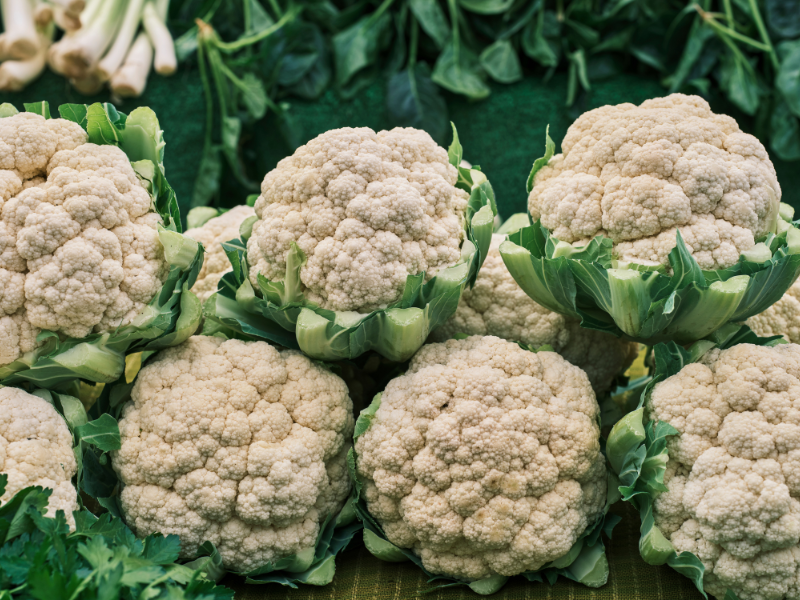
The reduction in supply has had a direct impact on prices. In April 2026, cauliflower prices were 85% higher than in April 2025 and 37% above the 2021-2025 average for the same month.
National production declines
The national cauliflower area in France for the 2025/26 season is expected to fall by 5% year-on-year, to 12,140 hectares. In volume terms, production is forecast to decline by 9% compared with the previous campaign.
The decrease is particularly significant in the western basin, where harvested volumes are expected to be the lowest recorded in the last six years. After a winter marked by a substantial advance in production, French supply began to shrink from March onwards.
A more dynamic market from March
The season entered its final phase in March with more limited availability, supported by demand from Germany, while domestic demand was less buoyant. This combination led to a sharp rise in prices.
In April, supply remained sufficient to maintain a steady flow of exports, particularly to Eastern Europe, although prices continued to stay firm.
Higher exports and lower processing volumes
As the campaign draws to a close, export volumes are expected to have been higher, especially during the second half of the season. This trend was supported by reduced competition from southern European production basins.
By contrast, volumes destined for processing in France were lower, due to more moderate demand from the frozen food industry.
RELATED NEWS: UK and France strengthen cooperation on food security and agri-food trade
Between June 2025 and March 2026, cumulative exports of cauliflower and broccoli reached 80,100 tonnes, up 5% compared with the same period of the previous marketing year. Imports, meanwhile, fell by 7%, to 50,500 tonnes.
A stronger trade surplus
The foreign trade surplus in volume terms stood at around 29,600 tonnes, 36% higher than last year. Over the period analysed, the penetration rate of the French market remained at 35%, unchanged from the previous campaign, in a context of lower consumption.
The end of the season therefore confirms a scenario of reduced availability, firmer prices and more active export markets, although domestic demand has been less dynamic and demand from the processing industry has remained more limited.