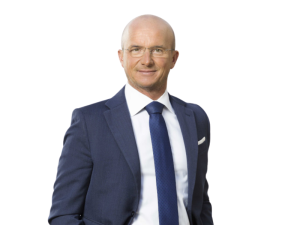







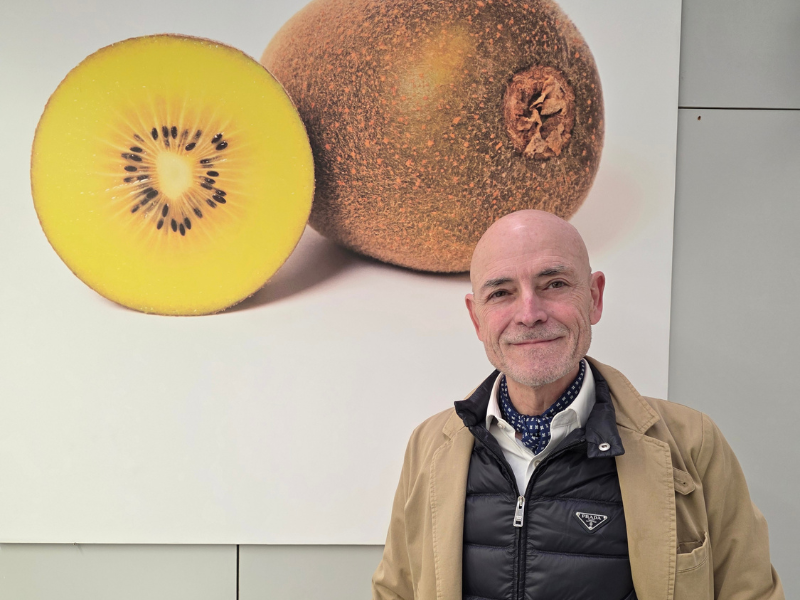
Joaquín Rey, director and owner of FruitGrowing Quality, part of the KIBI consortium, expresses it bluntly: “The current market model requires solutions and deep structural changes. The wholesale channel must evolve to remain competitive.”
The executive explains that one of the main problems lies in the night-time trading model, which has remained largely unchanged for decades. According to him, the traditional greengrocer business required working days of up to sixteen or seventeen hours and activity concentrated in the early hours of the morning, a sacrifice that younger generations are no longer willing to accept.
The entrepreneur notes that even many professionals from his own generation have chosen to delegate purchasing to specialised companies and focus exclusively on sales, given the difficulty of maintaining that pace of work over time. In this context, he believes the sector is increasingly struggling to ensure generational renewal.
This situation is compounded by a gradual loss of activity within the market itself. Rey states that “when walking through the aisles there is a clear lack of demand,” which he considers the real structural problem faced by the Madrid wholesale market.
Another factor weakening Mercamadrid’s role is the competition from wholesale warehouses located in nearby municipalities. In towns such as Getafe, Alcorcón, Fuenlabrada and Pinto, numerous warehouses have emerged in recent years operating outside the central market premises.
RELATED NEWS: Mercamadrid: Investments in modernization, sustainability, and innovation
These facilities, authorised by local councils, work with daytime schedules —from seven in the morning until seven or eight in the evening— and supply thousands of small retail shops directly. According to Rey, this peripheral network has taken between three and four thousand potential buyers away from Mercamadrid. In addition, the logistical ease and convenience of daytime schedules are consolidating this parallel supply model.
The businessman also points out that the market structure itself has changed over time. According to his estimates, between 25% and 30% of the stalls are no longer dedicated to the direct sale of fruit, but operate mainly as logistics or storage platforms, a transformation that reflects the evolution of the wholesale business in recent years.
Despite this critical assessment, Rey acknowledges that “Mercamadrid still has strategic value from a logistical and distribution point of view.” Its location allows goods to be redistributed to numerous provincial markets, from Castilla y León to Galicia. For this reason, he considers that traditional fruit shops continue to be essential to add value to products and, above all, to allow brands to reach the final consumer.
FruitGrowing Quality: Kibi
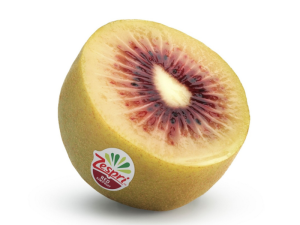
The development of proprietary brands is precisely one of the strategic lines that his company is promoting within the kiwi sector. FruitGrowing Quality focuses on the production, packing and marketing of this fruit, combining its own production with a network of associated growers.
The company distributes yellow varieties under licence for several international markets, including Spain, Portugal, Brazil and Turkey.
The executive explains that the company is betting on the Kibi brand, a name deliberately written with a “B”. This concept responds to the slogan “kiwi con B de bueno” (kiwi with B for good), a strategy designed to capture consumers’ attention from the first moment and differentiate the product at the point of sale.
Sector organisation
At the same time, the Spanish kiwi sector is seeking to organise itself in order to gain greater weight in international markets. Rey participates in the Spanish Kiwi Growers Association (AEKI), an organisation that brings together producer groups from different regions, including Asturias, Galicia, Extremadura and Andalusia.
The association works on technical and regulatory issues —such as phytosanitary aspects, quality standards and marketing sizes— and aims in the future to create a common brand representing Iberian production as a whole.
Among its objectives is also to strengthen the sector’s international presence and participate in forums such as the International Kiwifruit Organization (IKO), as well as to integrate into structures of the Spanish export sector in order to gain greater institutional representation, such as FEPEX, and eventually form its own dedicated sector group.
Regarding the market, the entrepreneur notes that “green kiwi consumption remains stable, while yellow kiwi continues to grow thanks to its sweeter flavour and greater storage stability. This behaviour has made it possible to broaden the consumer profile, especially among children, who find this fruit a healthy and easy-to-eat option.”