






The European Union and Mexico are moving towards a new phase in their trade relations. European Commission President Ursula von der Leyen, European Council President António Costa and Mexican President Claudia Sheinbaum are set to meet on Friday 22 May in Mexico City for the eighth EU-Mexico Summit, where the updated trade agreement between both parties is expected to be signed.
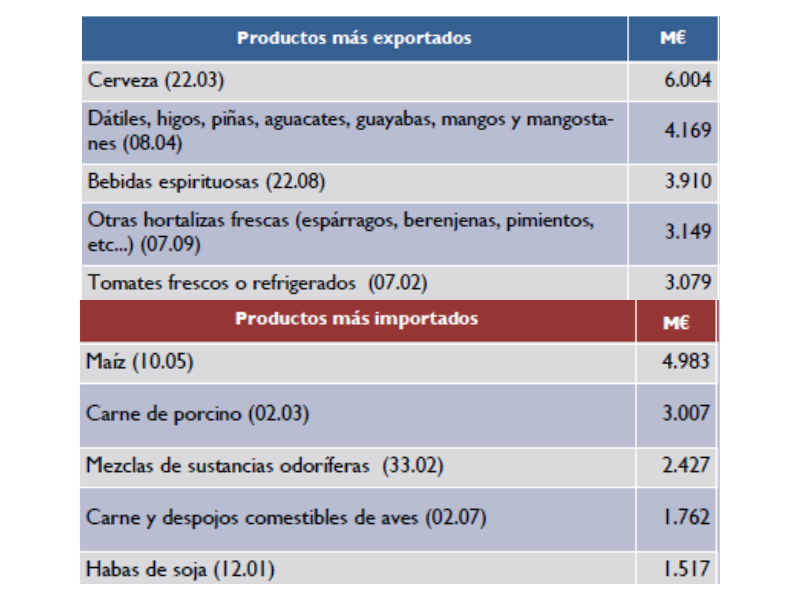
The new pact will modernise the agreement currently in force since 2020 and will involve a significant liberalisation of bilateral trade. Among the main changes, Mexico will remove almost all remaining tariffs on imports from the European Union, most of them linked to agricultural products.
New conditions for agri-food trade
The removal of tariffs opens up new opportunities for European exporters, particularly in the agri-food sector, where certain barriers to accessing the Mexican market still remained.
According to the Council of the European Union, the updated agreement will also improve conditions for other strategic sectors, including machinery, pharmaceuticals and transport equipment. Through this agreement, Brussels aims to strengthen the competitiveness of European companies in a highly relevant international market.
Cooperation on raw materials and digital trade
Beyond tariffs, the EU and Mexico will strengthen cooperation in strategic areas such as critical raw materials, intellectual property, digital trade and public procurement.
The agreement will also update rules to ensure more equal treatment between European and Mexican companies, a key element for facilitating investment and improving legal certainty for economic operators.
Provisional application of the trade deal
The trade agreement may enter into provisional application once it has been formally signed, even before the European Parliament gives its final approval. This procedure would allow the commercial measures to be applied more quickly and provide companies with a more favourable framework in the short term.
RELATED NEWS: Mexico leads global fruit and vegetable exports
In parallel, the Summit will also include the signing of the political cooperation chapter, covering commitments on security, judicial cooperation and the fight against climate change. Unlike the trade chapter, this part of the agreement will require ratification by EU Member States.
A strategic relationship for the EU
The update of the agreement with Mexico forms part of the EU’s strategy to diversify trade relations and reinforce partnerships with strategic allies. In a global context marked by geopolitical tensions, supply chain reorganisation and international competition, the EU is seeking to consolidate links with key markets beyond its immediate neighbourhood.
For the agri-food sector, the new framework could open up additional export opportunities, although its impact will depend on demand trends, the competitiveness of European products and the ability of operators to take advantage of the improved market access conditions in Mexico.