








Mangoes are gaining ground in Spanish households. Domestic consumption reached 49,857 tonnes in 2025, compared with 37,366 tonnes the previous year, representing growth of 33.4% in just one year, according to data from MAPA’s Spanish Household Food Consumption Panel.
The figure covers all mangoes purchased by Spanish households, regardless of origin, and confirms the dynamism of a category that continues to gain a greater presence in the shopping basket. Against this backdrop of growth, origin takes on particular importance. While mangoes are available virtually all year round, European mangoes have their own commercial window and offer the advantage of proximity, reducing the time between harvest and consumption.
Optimum ripeness and proximity
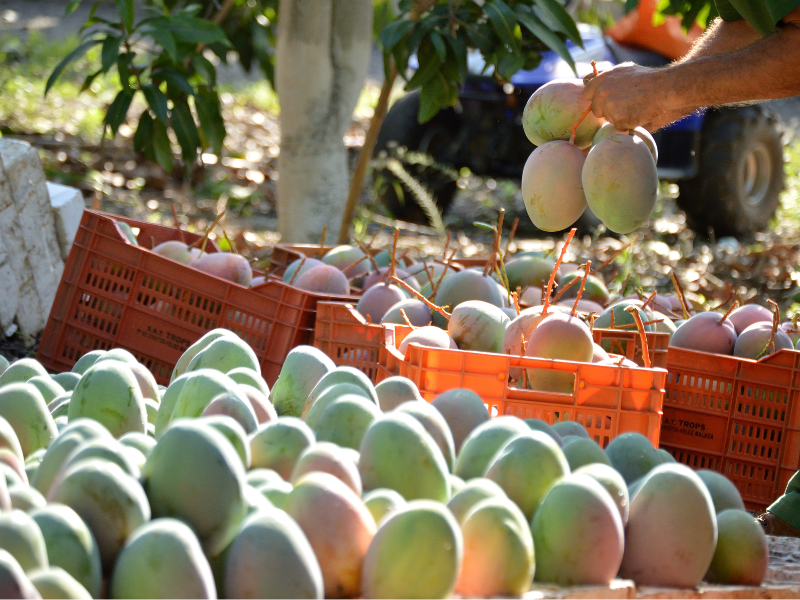
Proximity to the main European markets allows mangoes to be harvested at an appropriate stage of physiological ripeness and considerably reduces the time between harvesting and reaching the point of sale.
This shorter journey helps preserve their organoleptic qualities — aroma, flavour and texture — and contributes to a positive eating experience.
This is precisely where one of the main challenges for this expanding category lies. Mangoes are increasingly present in households, but their origin, seasonality and the differences associated with different production origins are not always clearly identifiable at the point of purchase.
A European crop with Spanish roots
Spain is the leading mango producer in the European Union, with production concentrated mainly in the Axarquía area of Málaga and Granada’s Costa Tropical.
The area currently devoted to the crop stands at around 6,150 hectares, according to MAPA. In addition, operators declared approximately 55,500 tonnes of mangoes to INTERTROPIC during the 2025 season.
RELATED NEWS: European mango season gets underway
The season begins with early varieties such as Irwin and, to a lesser extent, Tommy Atkins, before moving on to Osteen, the main European mango variety grown in Spain. This is followed by Kent and, particularly, Keitt — a later-season variety and the second most important — which extend product availability at points of sale for several more weeks.