









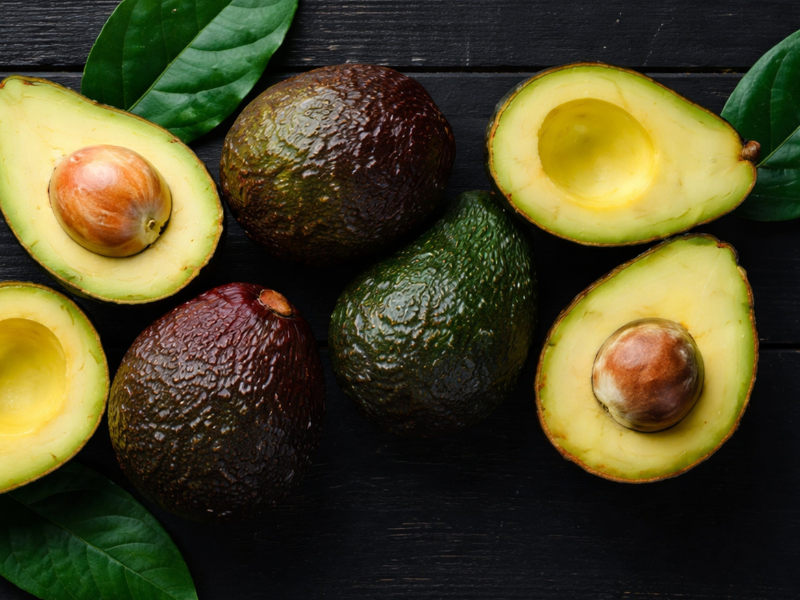
Changing climatic conditions could expand the areas of Europe suitable for the production of higher-value tropical fruits, particularly avocados and mangoes, in the coming years.
This is highlighted in a report prepared by Camila Bonilla Cedrez, Senior Specialist in F&A Climate and Environmental Risks at Rabobank, and Cindy van Rijswick, Global Head Crops at the Dutch financial institution, which analyses how climate change and market developments could reshape Europe’s production landscape.
According to the study, rising demand, increasing import values and Europe’s continued dependence on supplies from third countries are strengthening the commercial appeal of these crops for growers seeking higher-value alternatives to traditional fruit production.
Spain and Portugal already show the way
The report highlights that climate change is improving production suitability in some areas of southern Europe, particularly regions close to the Mediterranean and Atlantic coasts.
Spain and Portugal are presented as examples of this evolution. Lower frost risks in certain areas, favourable microclimates, investment and the development of specialised supply chains are already supporting the expansion of these crops.
Climate suitability projections for 2050 also point to greater potential in existing production areas and in certain regions of southern Italy, Greece and the eastern Mediterranean.
However, Rabobank stresses that this opportunity is not widespread. The potential will be selective and will depend on the combination of several production and commercial factors.
Water availability, a key factor
Favourable climatic conditions alone will not guarantee the viability of new tropical fruit projects.
To transform improved climate suitability into commercially competitive production, regions will need reliable access to water, available land, capital and skilled labour.
RELATED NEWS: The other unknown tropicals
Additional requirements include technical support, post-harvest infrastructure, marketing capabilities and the ability to manage increasingly frequent extreme weather events.
Therefore, the future growth of European tropical fruit production will depend on each region’s ability to develop a strong, scalable value chain, alongside its capacity to adapt to changing climatic conditions.
A complementary offer to imports
The analysis does not foresee European production replacing tropical fruit imports from third countries.
Instead, the opportunity lies in complementing imported supply with a higher-value local offer, capable of differentiating itself through attributes such as freshness, quality, traceability and sustainability.
This positioning could allow European producers to compete particularly in premium and differentiated market segments, taking advantage of their proximity to major consumer markets.
The scenario outlined by Rabobank opens new opportunities for European mango and avocado production, but also makes clear that climate will only be one part of the equation. Access to resources, investment and commercial capabilities will ultimately determine which regions can transform this potential into a real growth opportunity.