









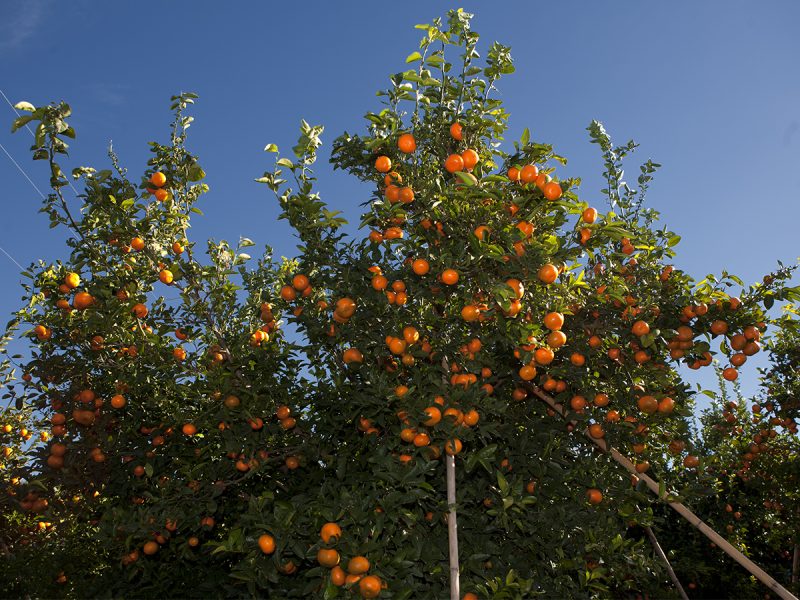
2026 harvest of the protected mandarin variety Nadorcott is already under way in the Iberian Peninsula. The campaign has started slightly earlier than usual and covers an officially estimated surface area of around 9,200 hectares, mostly located in Spain.
The variety is managed by the Company of Protected Plant Varieties (CVVP), which oversees its protection rights until 31 December 2029. Until that date, Nadorcott trees may not be planted or grafted without authorisation, nor may the number of trees exceed what has been contractually agreed by licensed growers. Any expansion of plantings will only be permitted from 1 January 2030 onwards.
“As we approach the final years of protection, it is essential that growers fully understand the importance of complying with the deadline,” explains Reyes Moratal, managing director of CVVP. “If Nadorcott production is detected in 2030 or 2031 on an unlicensed farm, that would clearly indicate that the trees were planted or grafted while the variety was still protected, which constitutes an infringement.”
RELATED NEWS: “Competition with South Africa will increase from next year onwards”
Moratal stresses that CVVP’s role will not end with the expiry of the protection period. “We will continue to safeguard the interests of our partners after 31 December 2029, using all available legal and extrajudicial measures to prevent any illegal exploitation of the variety.”
In light of this, CVVP is intensifying its monitoring efforts during the final years of protection, allocating additional human and technical resources to infringement prevention. Breaches of the rules can result in significant financial penalties and the compulsory removal of trees — even in otherwise legal orchards — if plantings exceed the authorised number.
CVVP strengthens its support for growers
“Protecting growers who comply with the rules is a priority for us,” Moratal notes. “Last year we inspected around 40% of the total planted area, and we plan to increase that proportion year after year.”
CVVP was a pioneer in Spain in implementing a structured management model for protected plant varieties. “At the outset, the concept of intellectual property applied to fruit varieties was difficult for society to accept,” Moratal recalls. “It has required considerable effort, but today the sector’s mindset is completely different, and the benefits of this system across the entire value chain are widely recognised.”
Beyond Nadorcott, CVVP currently manages several protected varieties on behalf of rights holders. “Our role involves processing authorisations, acting as an intermediary between breeders and growers, and supporting producers with administrative procedures, queries and technical assistance,” Moratal explains.
CVVP will once again attend Fruit Logistica in Berlin as an exhibitor and will welcome visitors at Hall 18, Stand A-02.