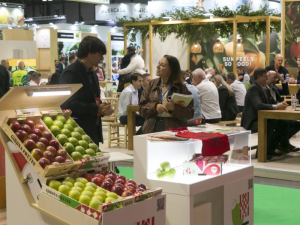









More than 50 representatives from the garlic production and marketing sector from France, Italy and Spain took part in the meeting of the Garlic Contact Group of the Joint Committee.
During the meeting, it became clear that the main threats to the viability of the European sector stem from the sharp increase in production costs. In recent years, farmers have had to face price increases of more than 40% in plant protection products, fuels, fertilisers and other essential inputs, a development closely linked to the impact of existing regulations and the international economic context.
Garlic imports
This situation is compounded by the notable increase in garlic imports recorded over the past three years, mainly originating from China and Egypt. Sector representatives agreed that this phenomenon has ceased to be a future concern and has become a real threat to the survival of garlic cultivation in Europe.
In this context, the Contact Group agreed to convey to Members of the European Parliament the need to adopt urgent measures, including the activation of the safeguard clause against imports from both Egypt and China.
The sector also called for an update of the dissuasive tariff of €1,200 per tonne applied to imports of Chinese garlic, which has been in force since it was established in 2001. According to the sector, the lack of revision of this instrument has progressively reduced its effectiveness due to the loss of value caused by the inflation accumulated over more than two decades.
Complementary actions
The committee also proposed the implementation of complementary actions such as strengthening customs surveillance, improving systems for control, traceability and verification of the product’s origin in order to avoid triangular imports, as well as introducing rigorous border controls to ensure that imported garlic complies with the same food safety standards required of European production.
In the production sphere, representatives also underlined the need to improve the availability of active substances authorised in the European Union, with the aim of restoring yield levels per hectare that existed before the withdrawal of numerous plant protection tools.
For its part, the National Association of Garlic Producers and Marketers (ANPCA) warned that the current situation jeopardises not only the profitability of farms but also the stability of the business and commercial network linked to the sector. The organisation stressed that European garlic competes under clearly unequal conditions with production from third countries that are not subject to the same regulatory requirements or the same cost structures.
RELATED NEWS: Spanish garlic sector warns of crisis
ANPCA insisted on the need for European institutions to act quickly and decisively to prevent an irreversible loss of cultivated area and productive capacity, underlining that garlic cultivation plays a strategic role in maintaining employment, economic activity and territorial cohesion in many rural areas.
The sector agreed that the adoption of effective measures in the short and medium term is essential to preserve the competitiveness, sustainability and future of one of the most emblematic horticultural crops of European production.
The FEPEX delegation to the Garlic Contact Group was composed of producers and marketers grouped within ANPCA, headed by its president, Juan Salvador Peregrín, and its director general, Luis Fernando Rubio, together with the Federation’s technical director, Luis Martín.