








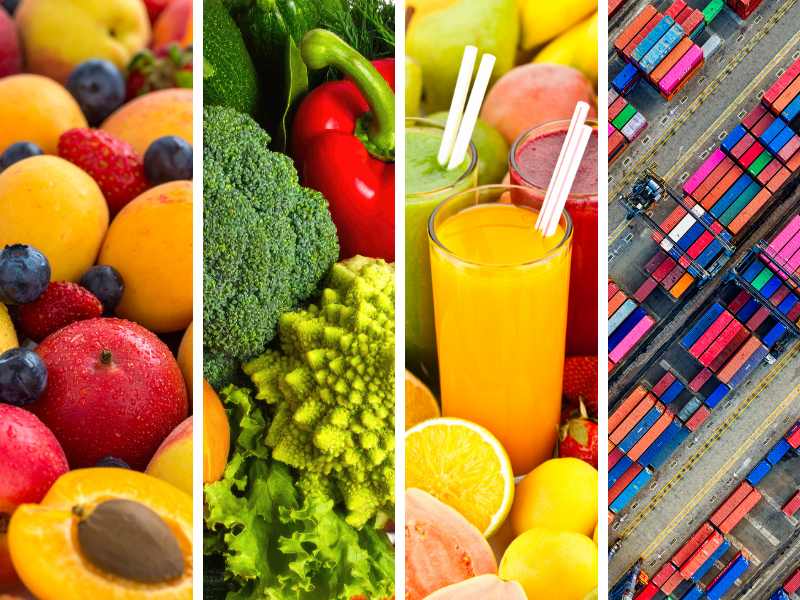
The European Union’s agri-food sector opened 2026 with a solid trade surplus, supported in part by the steady performance of fruit and vegetable exports, even as overall trade flows declined in value.
In January, the EU recorded an agri-food trade surplus of €3.2 billion, a 4% increase compared to the same month in 2025. This result comes despite a slowdown in both exports and imports, reflecting lower prices across several key commodities and a general adjustment in global trade dynamics.
Within this context, the fruit and vegetable segment continues to demonstrate resilience and strategic importance. Exports of fruit and nuts rose by 5% in value compared to January 2025, driven primarily by increased shipments of apples and pears. These categories remain among the EU’s most competitive products in international markets, benefiting from established trade relationships and strong demand in both European and third-country destinations.
The performance of fruit exports highlights the sector’s ability to maintain growth even in a more challenging market environment. While total EU agri-food exports fell to €17.5 billion in January—down 9% month-on-month and 8% year-on-year—the gains recorded in fruit and nuts underscore a more stable demand compared to other product groups more exposed to price volatility.
RELATED NEWS: UK and France strengthen cooperation on food security and agri-food trade
From a geographical perspective, EU fruit exports continue to rely heavily on intra-European trade, with neighbouring markets absorbing a significant share of production. At the same time, opportunities remain in third countries, particularly in Asia and the Middle East, although these markets are increasingly influenced by logistical disruptions and geopolitical uncertainty.
On the import side, the EU brought in €14.4 billion worth of agri-food products in January, marking a decline of 7% compared to December and 11% year-on-year. The most notable decreases were recorded in categories such as coffee, cocoa and spices, largely due to falling prices and reduced volumes. In contrast, fruit and vegetable imports showed a more stable pattern, reflecting their essential role in ensuring year-round supply within the European market.
Overall, the fruit and vegetable sector continues to play a key role in underpinning the EU’s agri-food trade balance. Its relative stability, compared to more volatile commodity markets, reinforces its strategic importance for both economic performance and food supply security.
Looking ahead, the sector’s outlook will depend on several factors, including climatic conditions, input costs and the evolution of global demand. In particular, ongoing geopolitical tensions and their impact on logistics and energy prices may influence competitiveness in export markets.
Even so, the consistent demand for fresh produce, combined with the EU’s strong production base and export capabilities, positions the fruit and vegetable sector as a cornerstone of the region’s agri-food trade performance in 2026.