










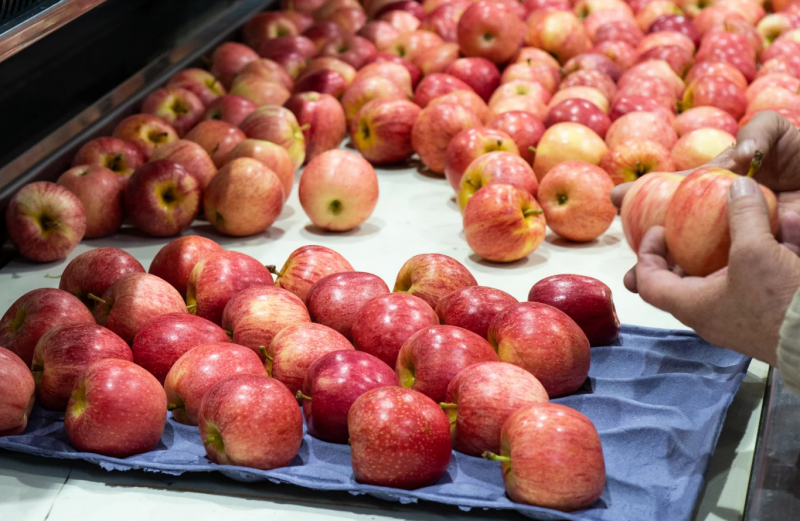
Belarus has introduced a ban on exports of fresh apples, a measure that also covers onions and white cabbage. The decision comes shortly after Kazakhstan restricted imports of the fruit, effectively closing the last route Russia was using to access affordable apples from the European Union through commercial re-export schemes.
Prices under pressure
According to analysts in the fresh produce sector, the measure is a major setback for Moscow’s efforts to contain food inflation. The Russian Central Bank has so far been unable to curb rising prices in the agricultural sector, where fruit and vegetables continue to reach record levels for consumers.
The timing of the restriction is particularly critical for the Russian market, as severe spring frosts in 2024 destroyed a substantial share of domestic production. With both Belarusian and Kazakh routes now closed, local shortages could accelerate further price increases, while alternative import options face significant limitations.
Suppliers geographically close to Russia, such as Iran and Türkiye, have long prioritised shipments to India and the Middle East, where they can obtain higher margins. This leaves China as one of the few remaining potential sources of supply.
Impact on the wider region
The situation is also having repercussions across neighbouring markets. On the one hand, it highlights growing operational strains within the Eurasian Customs Union, whose members are restricting trade flows towards Moscow. On the other, it is affecting Polish producers, who have been a key supplier to this indirect trade.
Although frost damage has also reduced Polish apple crops, growers have increasingly had to turn to industrial processing as an alternative outlet. While this provides some operational relief, returns are significantly lower than those obtained from selling fresh fruit.