








The Moroccan Avocado Summit held its second edition in Larache on 15 October, bringing together around 250 professionals from across the value chain. Growers, with a strong presence of smallholders, exporters, input suppliers, packaging companies, transport and logistics operators, financial institutions and public-sector representatives took part in an event that is consolidating its role as a key meeting point for Morocco’s avocado industry.
The main concern raised during the event was the low average productivity of farms, currently standing at around 5 tonnes per hectare, compared with close to 30 tonnes achieved by some of the main competing origins in Latin America, according to Abdellah El Yamlahi, president of the Moroccan Avocado Association (MAVA).
The summit also addressed the need to diversify markets and formats, improve compliance with social and environmental standards and move towards greater integration across the sector.
More production without significantly expanding acreage
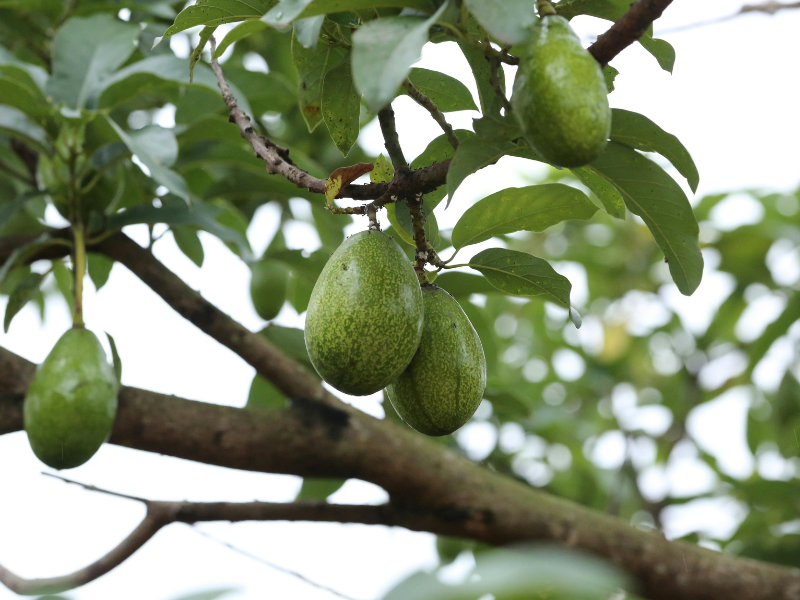
The event coincided with the start of the 2026/27 season, with the first volumes of Hass avocados expected to arrive at the end of October. MAVA estimates production at around 120,000 tonnes, of which approximately 100,000 tonnes would correspond to Hass exports.
Planted area has already exceeded 12,000 hectares, although some unconfirmed estimates put the figure as high as 17,000 hectares. According to El Yamlahi, future growth cannot rely primarily on further expansion of cultivated area, but rather on improving yields.
The conditions experienced last season, marked by high temperatures and late rainfall, are still affecting tree performance. Competitive pressure in international markets is adding to the challenge.
Morocco was unable to take advantage of its usual export window for smooth-skinned varieties this season due to intense price competition, particularly from Israel. The domestic market nevertheless helped absorb part of the fruit at prices considered favourable.
Good practices to close the yield gap
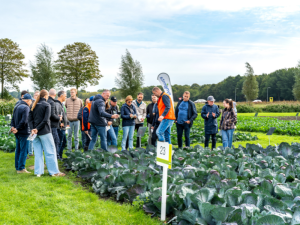
Improving yields was one of the main themes of the technical sessions. Abdellatif Amrani, Technical and Regulatory Director at Promagri, pointed to shortcomings in certain farming practices, particularly among smallholders, as one of the factors behind low productivity.
Avocado is a particularly sensitive crop, he noted, and requires precise management. Morocco’s climatic conditions add to the difficulty, especially when temperatures exceed the crop’s tolerance levels.
Along the same lines, Mustapha Mamdouh, Promagri’s Development Manager for Gharb-Loukkos, argued that the yield gap can be narrowed through appropriate agronomic management. According to him, growers applying good practices can already exceed 20 tonnes per hectare, while achieving 30 tonnes from six-year-old trees is not out of reach.
Nutrition must be adapted to the different stages of tree development rather than relying on indiscriminate fertilisation strategies. Water management is also becoming increasingly important as heat events become more frequent.
Chouaib Malloul, Irrigation Director at CMGP CAS, addressed the design of drip irrigation and misting systems to improve water efficiency and mitigate heat stress. Before making any investment, he recommended assessing both water availability and quality.
Water, labour and sustainability constrain growth
Access to water is one of the main limitations to the expansion of the crop. El Yamlahi argued that the sector’s strategy should focus on improving yields without compromising water sustainability, while addressing criticism over avocado water consumption through more efficient irrigation systems.
The availability of seasonal workers is another unresolved issue. The MAVA president said labour shortages continue to constrain production and explained that discussions are under way with the authorities about the possibility of bringing in foreign workers to meet these needs.
Compliance with social and environmental requirements is also becoming increasingly important, particularly as destination markets impose stricter demands. Imad Oustachne, an auditor at International Associates Morocco, explained that European, UK and North American buyers are paying increasing attention to issues such as workers’ rights, working hours, wages, safety and grievance mechanisms.
RELATED NEWS: Avocado: consumer expectations versus industry realities
In this context, audits under standards such as SMETA are becoming both a compliance tool and a means of accessing certain export markets.
Sustainability also extends to logistics. Hicham Hachimi Alaoui, Senior Sales Director at CMA CGM, highlighted the growing attention importers are paying to carbon emissions and called for greater use of maritime transport over road freight. He also stressed the importance of maintaining the cold chain, from harvesting and packing through to arrival at the destination.
Morocco seeks to consolidate its European advantage
According to MAVA forecasts, the main commercial window for Moroccan avocados this season will run from late October to late January, before larger volumes from Israel reach the market. The sector considers it particularly important to concentrate sales between early November and mid-December to avoid potential oversupply.
Morocco remains competitive thanks to its proximity to the European market, with maritime transit times of just three to four days, as well as an established reputation among buyers.
The international landscape will nevertheless remain challenging. MAVA estimates production this season at around 80,000 tonnes in Spain, 135,000 tonnes in Israel, 194,000 tonnes in Colombia and 265,000 tonnes in Chile. Israel is one of Morocco’s main competitors between November and January, while Latin American origins gain importance later in the season.
Distance is a disadvantage for the latter, with transit times reaching up to six weeks, although Colombia puts particular pressure on the small-size segment. Competition from Iberian and Latin American origins increases from February onwards, before Peru takes over later in the season.
Diversification to reduce dependence on Europe
Against this backdrop, Morocco’s avocado sector is exploring new growth opportunities. MAVA is holding talks to develop processed products such as guacamole and sauces for supermarkets and has conducted a study into the potential of frozen avocado, with results considered promising.
The sector is also looking to expand its presence in the UK and Middle East to reduce its dependence on continental Europe. Gulf markets are showing interest, although prices and competition from other origins, such as Kenya, remain obstacles.
El Yamlahi also called for greater integration across the sector and the creation of an interprofessional federation capable of jointly representing the interests of growers and operators before public authorities.
The objective, he concluded, should be to consolidate quality from the beginning of the season, move away from a strategy based exclusively on increasing acreage and develop a model built on higher yields, water efficiency, traceability and ESG standards.