











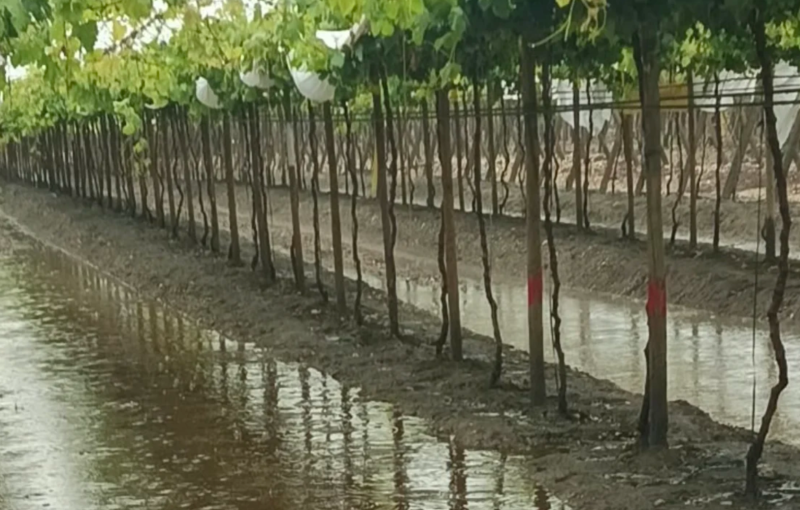
Table grape producers in northern Peru are facing significant logistical and agricultural challenges due to heavy rainfall associated with the El Niño phenomenon. Torrential rains that flooded key areas of Piura forced several exporters to temporarily halt harvesting operations during week 43, while others opted to reduce their planned export volumes due to difficulties in the field and with transportation.
Official forecasts
The Peruvian National Service of Meteorology and Hydrology (Senamhi) warned that weather conditions could worsen from the beginning of November, with an imminent risk of mudslides and flash floods. According to official forecasts, rainfall will be more frequent in the regions of Tumbes and Piura, also affecting areas of Lambayeque, while rainfall along the northern coast could continue intermittently until March.
Prolonged waterlogging poses a direct risk to the phytosanitary condition, quality and shelf life of the fruit.
The weather disruption comes during an unusual season, as high temperatures accelerated crop development and prompted the Piura harvest to begin around three weeks earlier than usual. This resulted in record commercial activity during the first weeks of the campaign. According to market intelligence data, between weeks 38 and 41 Peru shipped 57,700 tonnes of grapes, almost all originating in the north, more than three times the 18,800 tonnes recorded during the same period in 2025.
European importers on alert
The impact of the rainfall in Peru has put major European importers on alert. German company Kölla reported that, as a direct consequence of El Niño, growers in northern Peru estimate crop losses of between 15% and 20%, in addition to limitations in berry size.
RELATED NEWS: Peruvian asparagus reaches 63,600 tonnes of exports and strengthens traceability
At the same time, the earlier arrival of South American supplies will coincide with the continued presence of late Italian grape varieties well into November, together with additional volumes from Brazil. This is expected to create an unusual commercial scenario in destination markets.
The simultaneous overlap of several origins during November and December could alter the balance between supply and demand and put further pressure on international grape prices.