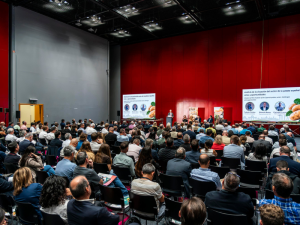








To mark the occasion, European Commission President Ursula von der Leyen took part in a videoconference with Mercosur leaders, alongside European Council President António Costa.
New opportunities from day one
Von der Leyen highlighted the significance of the agreement, stating that it marks a major step forward in opening markets and reducing trade barriers.
“From day one, tariffs are reduced and new market opportunities are created. This is good news for EU companies of all sizes, for consumers, and for our farmers, who will gain valuable new export opportunities while sensitive sectors remain fully protected,” she said.
The agreement is seen as a boost for the EU’s competitiveness, resilience and strategic positioning, reinforcing its global trade agenda.
A landmark trade deal
European Commissioner for Trade and Economic Security Maroš Šefčovič described the agreement as a milestone for EU trade policy.
“With the provisional application of the EU-Mercosur Agreement, it is time to ensure that this historic deal delivers concrete results,” he stated, underlining the importance of supporting businesses—particularly SMEs—in accessing new opportunities.
Tariff reductions and market access
The agreement will gradually eliminate import duties on more than 91% of EU goods exported to Mercosur, a market of over 700 million consumers.
Key EU exports such as cars, pharmaceuticals, wine, spirits and olive oil will benefit from significant tariff reductions, creating new opportunities in one of the world’s largest trading blocs.
RELATED NEWS: Brazil boosts juice shipments to Spain
For the agri-food sector, the deal is expected to boost EU exports to the region by up to 50%. Initial tariff-rate quotas and reductions have already come into effect, while 344 European geographical indications—including products such as Parmigiano Reggiano and Bordeaux—will receive legal protection against imitation.
At the same time, sensitive EU agricultural sectors will benefit from safeguards, including carefully calibrated quotas and reinforced controls.
Removing non-tariff barriers
The agreement also begins to address non-tariff and technical barriers to trade. New rules on conformity assessment, labelling and international standards aim to simplify procedures and speed up market access for EU companies.
Public procurement and services
EU companies will gain access to public procurement markets at both federal and state levels within Mercosur countries, competing on equal terms with local firms.
Service exporters—particularly in finance, IT and transport—will benefit from clearer licensing rules, non-discriminatory procedures and improved mobility for workers.
By 2040, the combined impact of these measures is expected to increase EU exports to Mercosur by 39%, reaching €50 billion annually.
Provisional application underway
The provisional application follows a decision by the EU Council in January to allow implementation after the first ratification by a Mercosur country. The European Commission confirmed the move at the end of February.
As the agreement begins to take effect, EU institutions are intensifying outreach efforts to ensure that businesses are fully informed and able to take advantage of the new trade framework.