







María Bilbao, Product Manager & Customer Experience Specialist at BASF, explains how digital tools are transforming the way potato crops are managed.
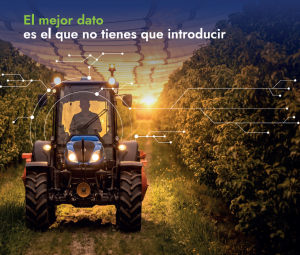
She summarises it with a clear idea: growers need to anticipate. “It’s no longer just about reacting when a problem appears, but about predicting it,” she explains during the interview. This is precisely the foundation of Agrigenio™ Potato, the digital tool developed by the company as a decision support system (DSS).
The system integrates weather data, crop information and agronomic models to provide technicians and growers with a clear view of what is happening in their fields and, above all, what may happen in the coming days. Based on this, it generates alerts and notifications that help determine whether action is required. These alerts are delivered via email.
One of the key aspects of this tool is that it does not replace the grower but supports them. Bilbao emphasises that the knowledge of the technician remains essential. “The system provides information, but the final decision still lies with those who know the land, the crop and the specific conditions of each area.”
Potato phenology
Among the distinguishing features of Agrigenio™ Potato is the importance given to crop phenology—that is, the stage of development the plant is in at any given time. This factor is crucial for adjusting recommendations and avoiding unnecessary treatments.
Acting on a plant in early stages is not the same as intervening during full development, and the system takes these differences into account to provide more precise alerts.
Moving away from calendar-based treatments
This approach supports one of the major shifts driven by digitalisation: moving away from calendar-based treatments.
Traditionally, many growers applied plant protection products preventively at fixed intervals, regardless of whether there was a real risk. With tools like Agrigenio™, the goal is to act only when conditions justify it.
“Calendar-based treatment is a ‘just in case’ approach,” Bilbao explains. However, the system makes it possible to identify when conditions are actually favourable for diseases such as late blight, avoiding unnecessary applications. This not only reduces costs but also lowers product use and waste generation.
The tool also incorporates water management modules, one of the major challenges in potato cultivation, particularly in areas such as Campo de Cartagena.
RELATED NEWS: BASF and Viagro: regenerative agriculture through new microbial strategies
By combining soil water balance and seven-day weather forecasts, the system provides irrigation recommendations tailored to the crop’s actual needs.
It also considers critical periods when the plant is especially sensitive to water stress, helping to prevent yield losses. In a context of limited water resources, this type of tool becomes essential for improving efficiency and optimising every drop of water.
Agrigenio™ also integrates disease, pest, fertilisation and crop development monitoring into a single platform. The aim, according to BASF, is “to move from scattered data to clear decisions”.
The system also enables harvest planning based on tuber development, helping growers determine the optimal harvest time and reduce losses. In addition, it allows the analysis of treatment effectiveness, taking into account factors such as plant growth and the impact of irrigation and rainfall on plant protection products.
Despite these advantages, adoption of such tools remains limited. Bilbao acknowledges that the agricultural sector still has a relatively low level of digitalisation and that the main challenge is convincing growers that these technologies can improve crop management.
However, where it has been implemented, such as in Campo de Cartagena, the response has been positive.