










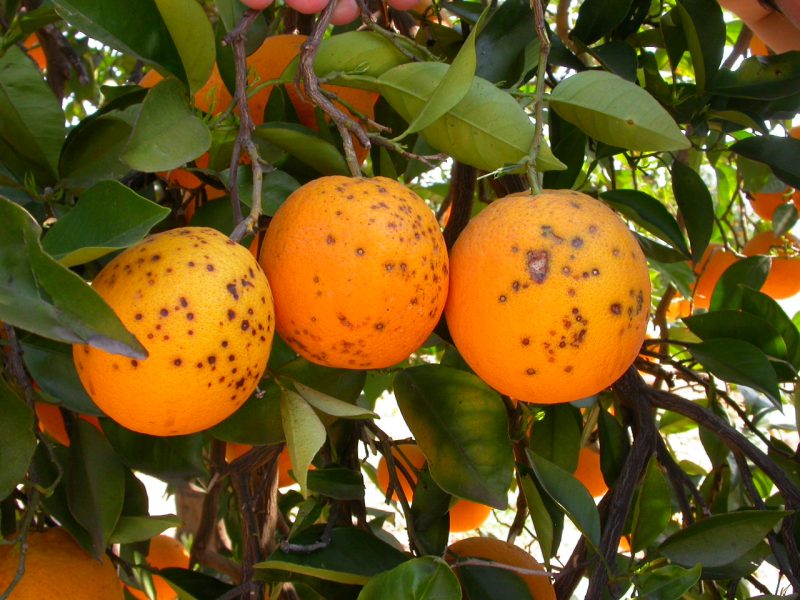
After a two-month information blackout at the beginning of the citrus season, the European Union’s (EU) TRACES platform has updated its records of pest and disease interceptions in imports from third countries. According to the Valencian Association of Farmers (AVA-ASAJA), South Africa recorded a further eight cases of citrus black spot (Phyllosticta citricarpa) in September and October, bringing the total number of interceptions of this serious disease, which is not present in Europe, to 27 so far this year.
South Africa has also recorded one interception of false codling moth (Thaumatotibia leucotreta) in Fortunella, a genus of fruit trees belonging to the Rutaceae family whose species are commonly known as kumquat.
Plant health risk
AVA-ASAJA president Cristóbal Aguado has criticised what he describes as continued inaction by Brussels.
“Brussels’ hypocrisy continues. Although the new term of the European Commission and Parliament brought a different rhetoric, with promises of greater support for farming, two years later there have been no real changes. Things have not improved; they have got worse. The plant health risk remains intolerable and unsustainable. Through its passivity, and even its complicity with South Africa, Brussels is putting our plant health security at risk,” he said.
AVA-ASAJA is therefore reiterating its call for the EU to take action and close its borders to South African citrus until the third country can guarantee the plant health safety of consignments destined for Europe.
RELATED NEWS: South African citrus season hit by war and flooding
The organisation is also calling for cold treatment to be applied to South African oranges in accordance with EU legislation in order to prevent the entry of false codling moth. It further requests that this requirement be extended to imports of other citrus species from South Africa that may also transmit the pest.
Given the high number of interceptions recorded in citrus imports entering the EU, AVA-ASAJA is calling for both citrus black spot and false codling moth to remain on the European list of priority quarantine pests and diseases when it is next reviewed.
Mercosur
The latest EU notifications also include three cases of citrus bacterial canker (Xanthomonas citri) detected in limes from Brazil during September and October, as well as two cases of black spot in oranges from Argentina.
Brazil and Argentina are among the countries that stand to benefit from the recently signed EU-Mercosur trade agreement, which was concluded despite opposition from the agricultural sector.