









The 2026 Spanish mango season has ended with a mixed balance, marked by good fruit quality but also insufficient profitability for growers. The Spanish Tropical Fruit Association (AET), which represents around 500 farmers, considers the season reasonably positive from a production standpoint, although well below the economic returns that should be generated by a fruit differentiated by its production conditions at origin.
This final crop stood at around 40,000 tonnes, below initial estimates but more than 10,000 tonnes above the volume recorded in the previous season.
For the AET, the results once again highlight the paradox facing the sector: high-quality fruit with significant added value that does not translate into sufficient profitability for growers.
Quality and differentiation, but rising costs
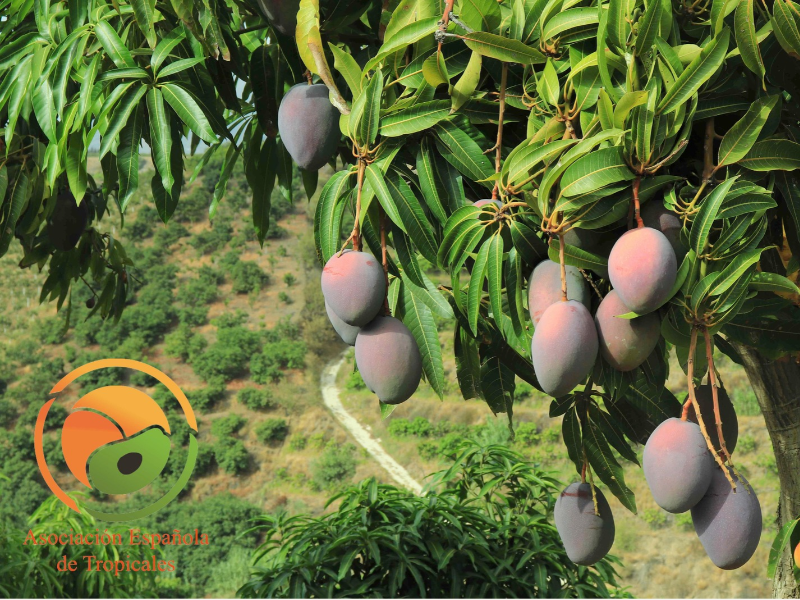
The main production areas for Spanish mangoes are concentrated in Málaga’s Axarquía region and Granada’s Costa Tropical, where climatic conditions allow growers to produce fruit with distinctive characteristics within the European market.
The association highlights the value of locally produced mangoes grown within the European Union regulatory framework, as well as the work carried out throughout the growing cycle to maintain high quality standards.
However, growers are facing an increasingly challenging environment due to rising water, fertiliser, energy and labour costs. This is compounded by uncertainty at the marketing stage, as growers may not know the final payment they will receive after having assumed the costs and risks associated with the season.
“Behind every fruit there is a full year of work, investment and sacrifice,” the association points out.
AET calls for greater profitability at farm level
Against this backdrop, the Spanish Tropical Fruit Association considers it a priority to move towards more transparent and balanced commercial relationships between the different links in the supply chain.
According to the organisation, the aim is to ensure that farmgate prices adequately reward the effort invested throughout the production cycle and guarantee the continuity of farming operations.
RELATED NEWS: Mango consumption in Spanish households grows by 33.4% in 2025
“Farmgate prices need to adequately reward the effort invested throughout the production cycle, allowing farms to remain viable and ensuring the continuity of high-quality agricultural production,” says José María López, president of the AET.
At the same time, the association recognises the role of marketing companies as essential partners in bringing the product to markets and consumers. Its call is for a relationship in which both growers and marketers can achieve fair returns.
A differentiated mango seeking to strengthen its market position
The AET is working to establish Spanish mangoes as a benchmark in the market based on their quality, proximity and differentiation at origin.
To achieve this, the organisation believes that consumer recognition of the product must also translate into economic returns for those who grow it. Growing cost pressures and commercial uncertainty make this issue increasingly important for the future of mango farms.
“It is not enough to produce one of the best mangoes in the world; we have to make growing it profitable,” says López.
The organisation is therefore advocating dialogue and cooperation across the value chain as ways of strengthening the future of an activity that generates employment and economic value in Spain’s main mango-producing areas.