







From Mateu Export, its CEO, Joan Mateu, sends a clear message: the current model is putting the future of the sector at risk
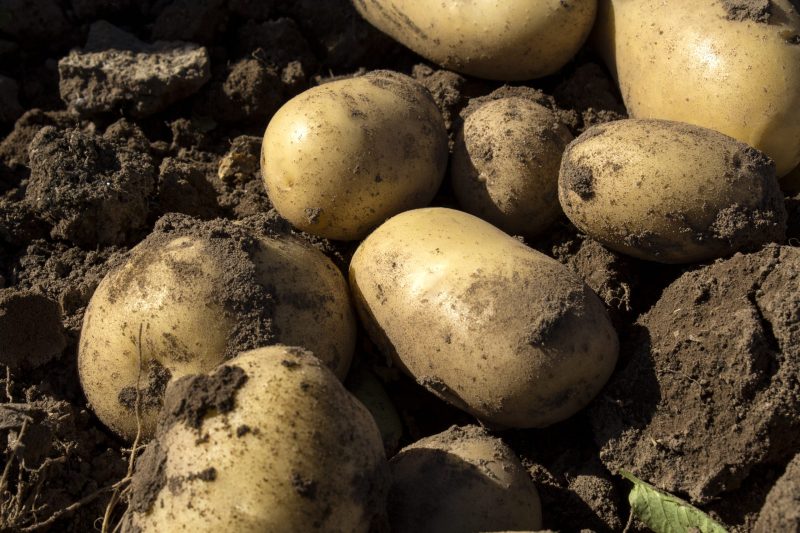
The potato campaign in Mallorca has not started well. Weather conditions—particularly the wind episodes recorded during February and March—have marked the beginning of the season and forced adjustments to forecasts. According to Mateu, planted area has been reduced by around 30%, in what was already a challenging context for the sector.
The wind has not caused direct damage to tubers, but it has affected plant development, reducing both volume and calibre. The company, specialised in export markets, is increasingly concerned about the accumulation of factors undermining crop profitability.
Without active substances
One of Mateu’s main criticisms is directed at European phytosanitary regulation. He denounces the progressive withdrawal of active substances without truly effective alternatives.
“Products are being banned, but the substitutes are less effective and much more expensive,” he explains, referring to key plant protection products such as nematicides used to control soil pests.
In his view, this situation creates a clear competitive disadvantage compared to other countries. Mateu points to Italy as an example, where certain active substances remain authorised, while in Spain they are restricted. This imbalance, he argues, translates into higher costs and lower effectiveness for domestic producers.
However, his criticism goes beyond regulation. Mateu highlights what he sees as a structural contradiction in European agricultural policy. On the one hand, programmes are promoted to support young farmers with EU funds; on the other, imports from third countries are allowed, which, in his opinion, do not always meet the same phytosanitary standards.
“It’s a contradiction,” he summarises. He particularly questions imports of potatoes from origins such as Egypt, about which he claims there are recurring concerns regarding sanitary conditions upon arrival at European ports.
This situation, he warns, is discouraging local producers, who perceive a lack of real protection for the EU market.
Rising costs
The result of this context, according to Mateu, is an increasingly strained sector. “Farmers are tired,” he states. And this fatigue has a direct consequence: a lack of generational renewal.
In Mallorca, agriculture is struggling to attract new professionals, largely due to the economic uncertainty surrounding the crop.
Despite the existence of specific support schemes for young farmers in the Balearic Islands, Mateu explains that many abandon the activity after a few years due to insufficient profitability. The combination of rising costs, regulatory uncertainty and external competition creates an unattractive scenario for younger generations.
RELATED NEWS: The challenge of exporting in an uncertain economic landscape
These factors are compounded by the overall increase in production costs, forcing growers to adopt a more cautious approach to planting decisions. In this context, the reduction in planted area this year reflects both climatic impacts and the need to manage risk in an increasingly volatile market.
Mateu Export, focused on export markets, reflects this reality well. The company organises its production according to external demand, while the domestic market is largely handled by local operators that absorb specific calibres.
This model, built over decades—the company will soon celebrate half a century of exports—is now facing a much more uncertain environment.
Mateu sums up the situation with a broader reflection: “Europe was created with the aim of protecting its internal market, but today producers feel that this protection has weakened in a globalised scenario.”