









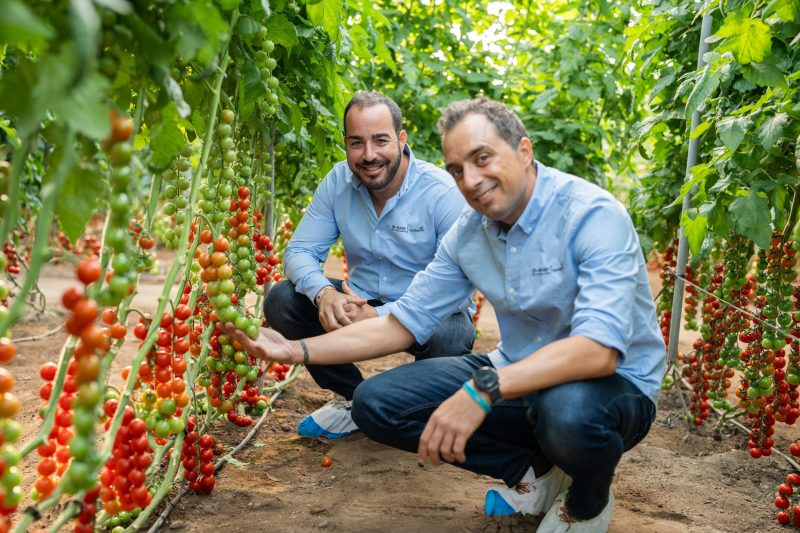
BASF | Nunhems has brought its tomato varietal development closer to growers and technicians in the main production areas, opening the doors of its demonstration farm in La Cañada (Almería) in December, and showcasing two additional sites in Vícar (Poniente) and Níjar (Levante). In January, it presented its latest developments at the demonstration farm in Águilas (Murcia).
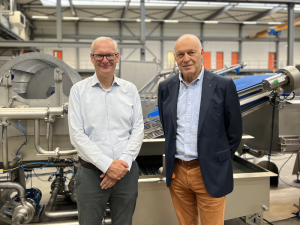
“Our goal is to bring our genetics closer to farmers in their own regions and under their usual growing conditions, while also giving them the opportunity to see other typologies they do not typically cultivate,” explains José Antonio Furió, Senior Sales Specialist for tomato at BASF.
To achieve this, the company has structured its open days around the present and future of tomatoes, showcasing in each segment both commercial and pre-commercial varieties, as well as others still under development and testing.
Currently, “we are evaluating more than 80 hybrids across different typologies,” all sharing a common feature: resistance to Tomato Brown Rugose Fruit Virus (ToBRFV). These internal trials, together with those carried out on commercial farms, “will allow us to accelerate the breeding process and the introduction of new varieties to the market”.
Cluster tomatoes: a four-leaf clover
Caboluna was its first cluster variety with resistance to ToBRFV, designed for short cycles. It was followed by Cabosur, its first large cluster variety also with resistance for long cycles. Since its launch, “it has positioned itself among the market leaders”.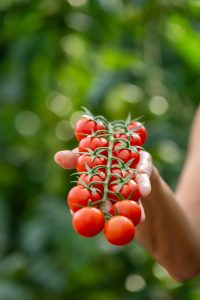
Beires offers “consistent production” throughout the entire cycle and, thanks to its “high tolerance to cracking”, allows clusters to be extended from 6–7 fruits to 8–10. It is suitable for both cluster and loose harvest and features resistance to Fulvia.
The latest addition is Fondon*, with high fruit quality, aimed at early cycles and offering dual harvest options (loose and cluster). Fondon* not only completes the “four-leaf clover” in BASF | Nunhems’ cluster segment, but also provides high resistance (HR) to ToBRFV.
Loose tomatoes: Palmeo
This large loose tomato (GG–GGG) is recommended for long cycles and, in addition to its resistance to ToBRFV—which ensures strong plant health—it stands out for its early production and rapid ripening, helping to reduce costs.
Its fruits are large, with an intense red colour and good post-harvest performance. “The calyx remains fresh for longer, making it more attractive to consumers”.
From cherry to plum with high resistance
In the cherry segment, Daivion remains the benchmark for cluster harvest. “It was our first variety with resistance to ToBRFV”. Its main strength is an extremely short internode.
“This facilitates harvesting, significantly reducing labour requirements, as plants have limited vegetative growth”. Combined with high productivity, this results in greater profitability for growers.
RELATED NEWS: BASF | Nunhems adds 5 ToBRFV-resistant varieties
In the plum segment, alongside Azovian—its flagship variety—BASF | Nunhems introduces Ismarian, a large-sized variety aimed at more traditional markets that demand bigger calibres; and Ivarian*, with high resistance to ToBRFV, ideal for areas more affected by the virus.
The company is also working on other plum varieties, including one designed for pre-packed export formats.
Rootstocks
Dreampower and Maaspower* are BASF | Nunhems’ two rootstocks with resistance to ToBRFV. The former offers medium vigour, providing a good balance for highly vigorous tomato varieties.
Maaspower* delivers “extra vigour” and is recommended for challenging soils, including saline and heavy soils.
In addition, the company plans to launch a new rootstock with “even higher vigour”.