






The European Union will begin enforcing a new set of packaging rules from 12 August 2026, marking a significant step in its strategy to reduce waste and strengthen circularity across the agri-food sector. The measures fall under EU Regulation 2025/40 on Packaging and Packaging Waste (PPWR) and will apply to all packaging placed on the EU market, including that used by exporters from third countries.
This new regulation introduces a phased implementation timeline extending to 2040, with progressively stricter requirements on recyclability, material use and environmental impact.
A shift towards fully recyclable packaging
At the core of the new framework is the objective that all packaging must be recyclable in an economically viable way by 2030. The regulation also seeks to reduce packaging volumes and increase the use of recycled materials, particularly in plastics.
Plastic packaging will be subject to minimum recycled content thresholds, while also being required to meet stricter criteria on weight, volume and contaminant levels. In addition, producers of recycled plastic outside the EU will need to comply with standards equivalent to those applied within the bloc, including those related to collection systems and environmental emissions.
New restrictions and material requirements
The PPWR also introduces limits on substances of concern, including per- and polyfluorinated alkyl substances (PFAS), and sets out restrictions or bans on certain types of packaging.
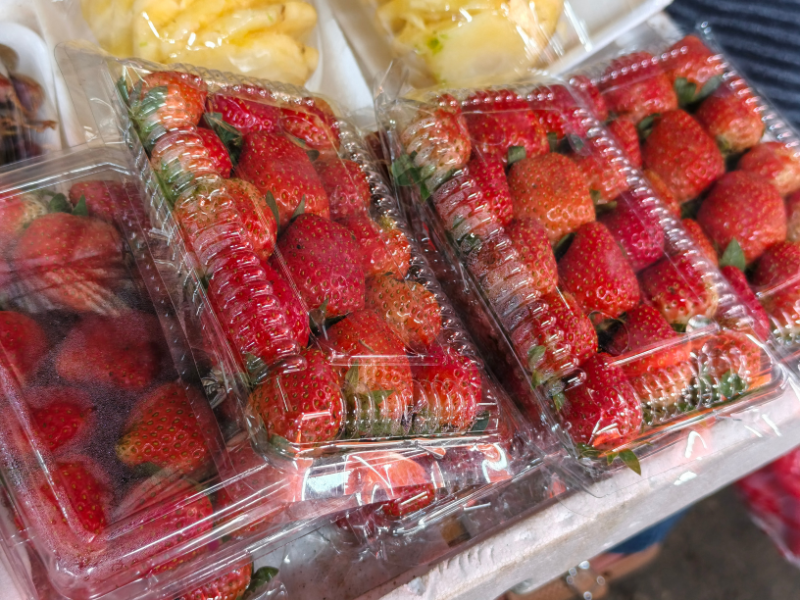
Among the most relevant measures for the fresh produce sector is the restriction on single-use plastic packaging for specific fruit and vegetable formats below 1.5 kg. Other requirements include industrial compostability standards for items such as fruit and vegetable stickers, as well as single-use tea and coffee bags.
These changes are expected to have a direct impact on packaging design, material selection and supply chain practices across the fresh produce industry.
Mandatory documentation and compliance obligations
From August 2026, all packaging marketed in the EU must be accompanied by a Declaration of Conformity (DoC), a legally binding document in which manufacturers or suppliers confirm compliance with PPWR requirements.
Exporters will be required to ensure that this documentation is available and shared throughout the supply chain. This includes not only the DoC itself, but also supporting technical documentation, which must be prepared following a conformity assessment procedure.
RELATED NEWS: The Commission launches a call for evidence on EU primary water legislation
The regulation provides specific templates for these requirements, detailed in Annex VII and VIII, aimed at standardising compliance processes across the market.
Implications for exporters and the fresh produce sector
The new rules will require exporters to the EU to adapt both packaging materials and documentation processes. Compliance will no longer be limited to product standards but will extend to packaging design, traceability and environmental performance.
For the fresh produce sector, where packaging plays a key role in product protection, shelf-life and logistics, the transition may involve significant operational adjustments.
At the same time, the regulation is expected to accelerate innovation in sustainable packaging solutions and reinforce alignment with broader EU environmental and circular economy objectives.
To view the full report, click here.