









The company combines its Spanish and European production with fruit from the southern hemisphere, particularly from Chile, a country where it owns its own orchards.
Apples are one of the flagship products of Frutas E. Sánchez. How is the campaign progressing?
We are currently halfway through the season and, to be honest, things are going well. This year we have excellent quality and good sizes, characteristics that greatly support sales.
Last season was somewhat weak in terms of quality, and that means consumers are receiving this season’s fruit much better.
Which origins are you currently working with?
At the moment we market apples from Spain, France and Italy. Our main flagship brand is Qué Rica!, with which we have always aimed to be very brand-oriented. We also maintain a very close relationship with major Italian operators such as VOG, Melinda and Val Venosta.
Of course, in the counter-season we work with fruit from the southern hemisphere, mainly from Chile, coming from our own orchards.
Is Golden still the main variety consumed in Spain?
Yes, and for that reason it is the main variety for Frutas E. Sánchez. In our case, we only handle it when it comes exclusively from the northern hemisphere.
What is the reason behind this decision?
The explanation is very simple. Golden has excellent storage capacity, and fruit produced in Europe can be stored perfectly for up to 12 months without losing quality.
This does not happen with Golden apples from the southern hemisphere. For that reason, we prefer to keep this variety exclusively from northern hemisphere production and make the hemisphere switch for bicolour varieties.
Which other products of Chilean origin do you work with?
Mainly cherries and kiwifruit. Cherries are marketed through Frutas E. Sánchez during the winter, while for kiwifruit we work through the company Kiwi World.
How has the Chilean cherry campaign been this year?
Cherries have had excellent quality this season and have sold well, partly because prices have been more accessible than in other years.
RELATED NEWS: Frutas E. Sánchez bets on innovation
It should be noted that over the past decade southern hemisphere producers have obtained very high returns from cherries, mainly thanks to the Chinese market. This led to many more hectares being planted. At the moment there is a situation of oversupply, because China is no longer absorbing all the volume that Chile wants to sell there. The Chilean cherry sector must reconsider the balance between supply and demand.
How does logistics influence this product?
Cherries are a product with high production and harvesting costs, to which packaging and transport costs must be added.
A significant part is transported by air, although some also arrives by sea. When shipments are made by air, costs obviously increase considerably.
How has the kiwi campaign been?
For Kiwi World the campaign has been very positive. Records were reached both in volume and in sales, and we view the evolution of kiwifruit with considerable optimism.

Is the market changing between green and yellow kiwi?
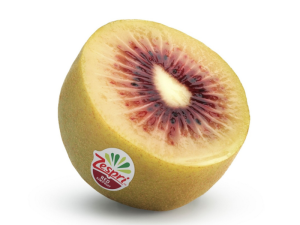
Yes, yellow kiwi is growing significantly. Zespri, for example, is reducing volumes of green kiwi while increasing those of yellow.
This opens opportunities for other origins, such as Chile, which can cover part of the gap that remains in the market during the summer. However, yellow kiwi is still an expensive product, although demand continues to grow day by day.
How is the strawberry campaign going this year?
The first part of the campaign has been complicated in terms of quality. Weather conditions, particularly humidity, have caused significant problems. Botrytis has been one of the main issues. It is a disease that is difficult to detect at the time of harvesting and can develop very quickly afterwards.
Is the situation improving now ?
Yes, the situation now seems to be improving and the campaign is starting to recover. But the truth is that we have practically lost a month and a half of the campaign due to quality problems.
However, during Easter, volumes have been higher than in previous years.