









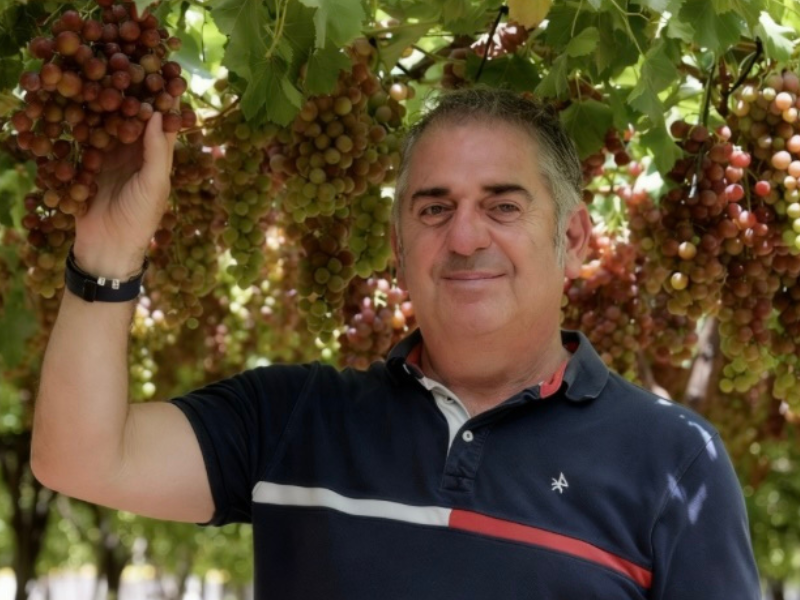
Fruit Today magazine spoke with Manuel Tornel, Coordinator of the Table Grape Breeding Team at IMIDA and breeder at ITUM.
What stage have your main research programmes reached?
We are strongly focused on the introgression of genes for resistance to fungal diseases through conventional crossing and hybridisation. This involves incorporating resistance genes from other grape varieties, including wine grapes and wild Vitis species.
We already have ITUM15 and ITUM17, which allow growers to reduce the number of crop protection treatments required during cultivation.
Which varieties are currently the most important in Murcia?
Rose Caramel is one of the most widely grown varieties. Cool Grape (ITUM5) has also shown very stable agronomic performance and consistently high yields per hectare.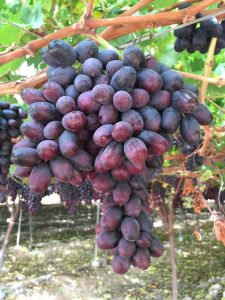
Overall, our flagship varieties are ITUM5 (Cool Grape), ITUM9 (Crispy Pink Dreams), ITUM12 (Black Joy) and ITUM15 (Rose Caramel).
How does extreme weather affect grape varieties?
Extreme weather can prevent grapes from developing their natural colour and accumulating sufficient sugars. In those situations, growers often need to apply ethephon or abscisic acid.
The varieties developed by ITUM are based on local genetic material and are fully adapted to our growing conditions. As a result, they develop their natural colour without the need for these applications.
How many varieties has ITUM registered?
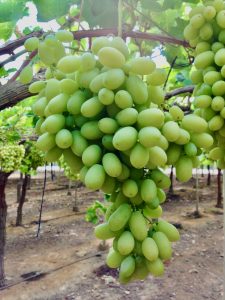
We have registered 21 varieties: 10 white and 11 coloured grapes, including pink, red, violet and black varieties.
Our latest release is ITUM21, a very late-season red grape with a Muscat flavour, extending the production calendar into October. It develops its natural red colour without any treatment, and its skin has a high level of pruina, which acts as a natural protective layer.
How are you approaching the international expansion of these varieties?
RELATED NEWS: Grapes break the calendar and redraw the global map
Our varieties are now present in 11 countries across five continents: Australia, South Africa, Namibia, Chile, Peru, Brazil, Argentina, India, Mexico, the United States and Spain.
We have recently shipped plant material to Mexico, India and the United States.
Alongside Spain, Australia is one of the countries where we have experienced the strongest growth, particularly in red grapes. Overall, our varieties now cover more than 21,500 hectares.
What is your latest research focus?
We are developing healthier grapes by breeding red-fleshed (teinturier) varieties that contain five to six times greater antioxidant capacity thanks to their high concentration of phenolic compounds.
A 200 g serving of these grapes provides an antioxidant intake equivalent to approximately one kilogram of conventional grapes.