










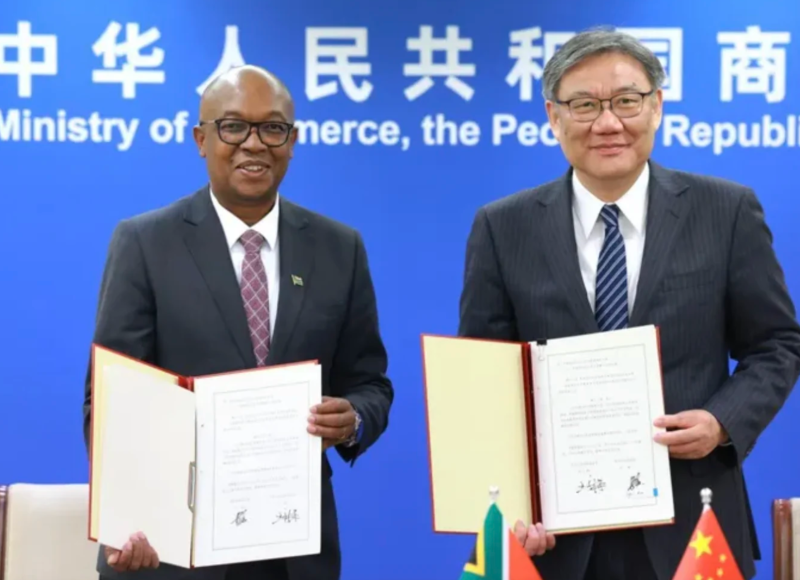
Under the new Framework Agreement on Economic Partnership for Shared Prosperity (CAEPA), South African exports to China will benefit from zero-tariff market access, eliminating tax barriers for a wide range of domestic products.
This development, highlighted in a recent report by IOL Business Report, positions South Africa as one of the main beneficiaries of China’s unilateral trade liberalisation initiative, now extended to 53 African countries. According to the terms of the agreement, South Africa will enjoy tariff-free treatment on 100% of its export tariff lines to the Asian giant, aiming to provide a stable, predictable and long-term institutional safeguard for local producers.
Key sectors and expected benefits
The removal of tariffs will not only benefit the agricultural sector—already exporting products such as wine, beef, rooibos tea and avocados—but also opens a critical window of opportunity for manufacturing and engineering.
The South African government and business leaders expect this measure to:
Increase price competitiveness: South African products will become more attractive compared to international competitors that still face tariffs.
Promote industrialisation: The agreement is expected to encourage the production of value-added goods in South Africa for direct export.
Attract foreign investment: There is growing interest from Chinese investors in injecting capital into South African companies to improve production efficiency and logistics infrastructure.
The agreement with China comes at a strategic moment, creating a clear contrast with the trade policies of other traditional partners. While China removes its tariffs, other powers maintain significant duties on certain South African products, reinforcing economic ties within the BRICS bloc.
RELATED NEWS: Strong industry alliances support Asia Fruit Logistica’s China meet up 2025
Despite the optimism, analysts and industry representatives warn that success will depend on the ability of South African companies to meet Chinese quality standards and on active government implementation to ensure that this legal framework translates into real economic growth and job creation.