







The new consumer is looking for cut products, convenience formats, smaller sizes and greater ease of consumption. This growing trend has led Bayer to pivot its innovation strategy towards fresh-cut (IV gama) and ready-to-eat products, with the aim of supporting more convenient consumption.
In line with another key trend in recent years—the increasing consumption of watermelon—the company has also reoriented its strategy, allocating greater investment to the development programme for this category. As a result, its upcoming Melon and Watermelon Week will focus on new watermelon developments.
“Everything is already defined; the event will take place over a single week, from 29 June to 3 July,” at its Miranda farm (Campo de Cartagena), explains José Guirado, Market Development Melon Iberica at Bayer.
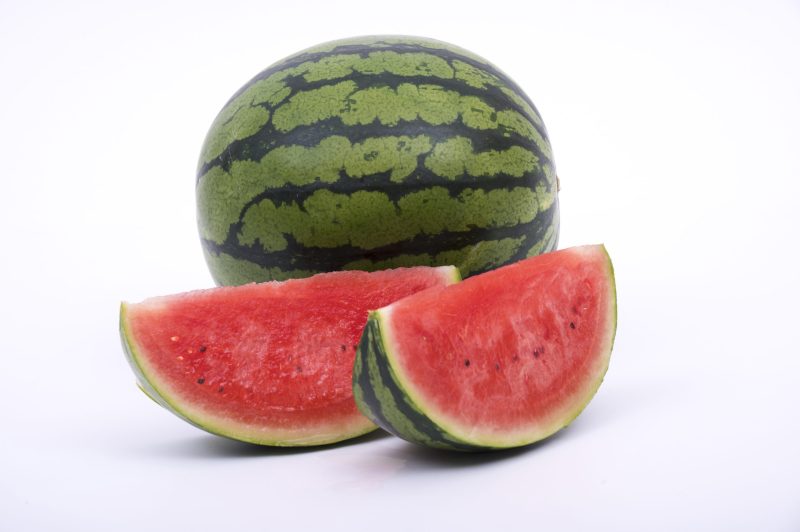
In this context, the ultra-firm watermelon Durlinda emerges as one of Bayer Seminis’ strongest bets, as it is specifically designed for processing.
“We have been seeing sustained growth in recent years, with significant volumes in Iberia and counter-season production in other origins.” In Spain, interest from the processing sector continues to grow and, in his view, the best results are achieved with ultra-firm varieties.
Lunalinda and Polinesia in good shape
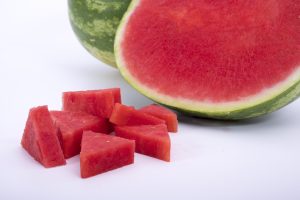 At the time of the interview, the seed sales campaign had practically concluded, confirming growth in Lunalinda sales and a very positive reception for its pollinator Polinesia in its first commercial year.
Lunalinda, a striped triploid, continues to gain market share in Murcia and La Mancha thanks to its excellent internal quality and uniform size (4–6 kg), making it suitable for both domestic markets and export.
Polinesia, with a weight of 2.5–3 kg, is well suited to export markets. Its round shape and tiger stripe pattern clearly differentiate it from triploid varieties. Its later ripening compared to other pollinators allows synchronisation of harvesting with the main variety, optimising labour. “We have got it right with this material.”
By the end of 2026, the company expects to introduce a new micro-seeded Crimson-type pollinator, SVWT4104, for late transplanting.
New developments in melon
After several years of absence in the piel de sapo segment, Bayer Seminis returns with the promotion, in the pre-commercial phase, of SVMP6001 for late cycles in Murcia and mid cycles in La Mancha.
It is the company’s first piel de sapo with resistance to some of the viruses already present in its Galia and cantaloupe ranges. It also stands out for its plant vigour, flavour and branded size (2.5–3.5 kg), aligned with market trends.
RELATED NEWS: Bayer to launch innovative strawberry variety
Additionally, its second-year commercial varieties are also being well received. Within the Cyro Line range, Galves, replacing SV5133MG in Campo de Cartagena, offers a resistance package including powdery mildew, aphids, CYSDV, WMV and ToLCNDV; while Gallager, a long shelf life variety for April plantings in Murcia, stands out for its exceptional flavour and texture.
In the Orange Candy segment, SVMA6731 covers late plantings in Cartagena and La Mancha, ensuring production continuity with a complete resistance package while maintaining optimal size.
In Charentais, Acapella stands out for its plant vigour and fruit quality, while incorporating for the first time in this typology resistance to CYSDV, alongside aphid and powdery mildew resistance.