






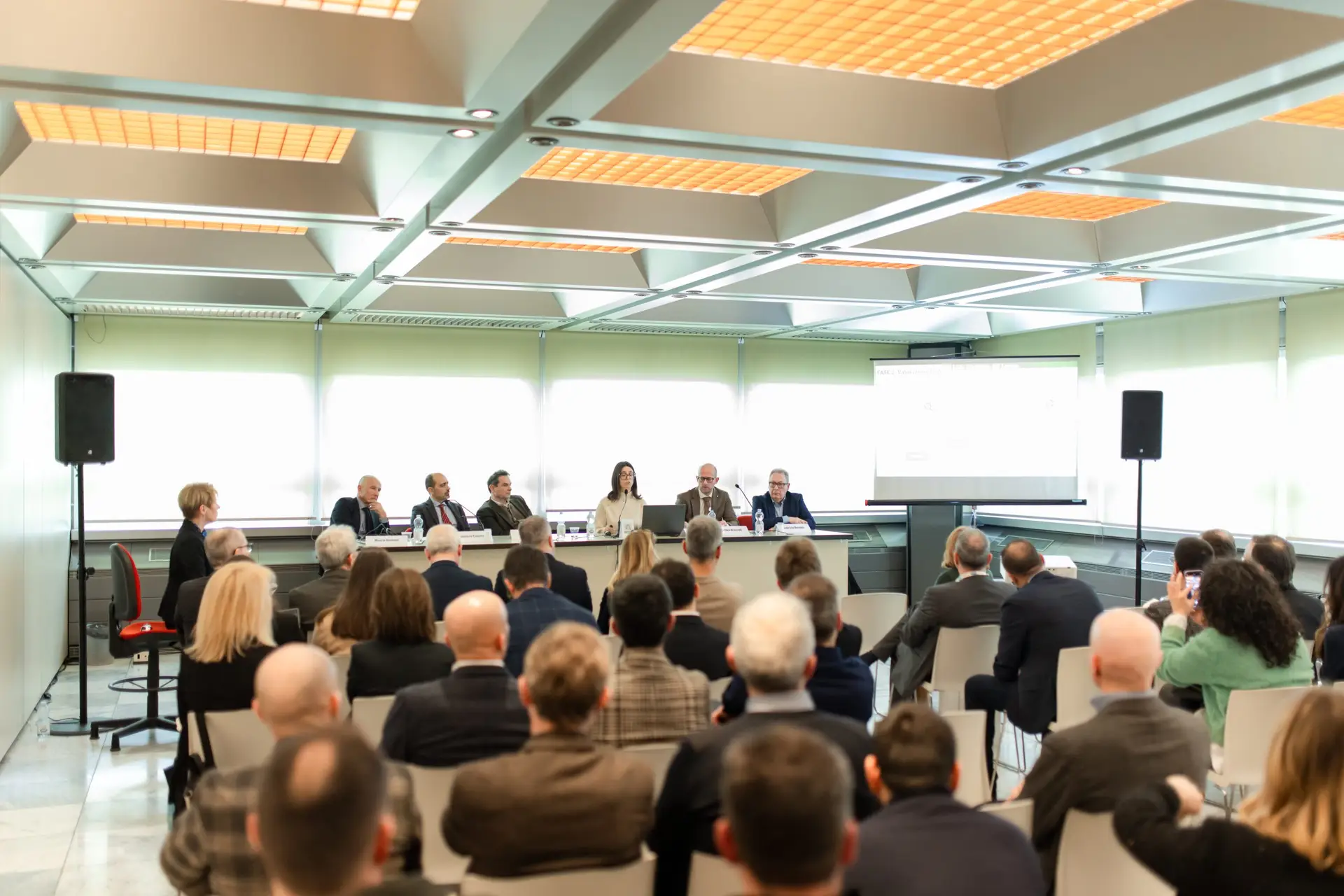
The event, promoted by Pro Food—the group representing fresh food packaging manufacturers—aimed to place science at the heart of the debate on the environmental impact of fresh fruit and vegetable packaging and sustainable solutions to meet the sector’s environmental, production, and economic needs.
One of the conference highlights was the presentation of the results from a detailed study conducted by the Department of Agricultural, Forest, and Food Sciences (DISAFA) at the University of Turin. Commissioned by Pro Food, the study, titled “fresh fruits and vegetables and their primary packaging: a preliminary study on the environmental impact from farm to table,” is an exemplary piece of work. Dr. Alice Varaldo presented the findings of an in-depth analysis of the environmental impact of fresh packaged produce—such as strawberries, nectarines, cherry tomatoes, and table grapes—using the life cycle assessment (LCA) methodology to examine the entire product life cycle from field to fork.
The study considered various impact indicators, such as global warming potential (GWP), land use (LU), and water depletion potential (WDP). It highlighted the positive environmental performance of rPET (recycled polyethylene terephthalate) packaging compared to compact cardboard (CC). Dr. Varaldo explained: “We did not limit our analysis to environmental impact in isolation, but also considered product shelf life. With rPET, food waste is significantly reduced compared to cardboard, a crucial factor on the path to enduring sustainability.” However, the agricultural production phase emerged as the most impactful along the supply chain, underscoring the need for an integrated approach to address environmental challenges.
Examples of successful corporate initiatives
Matteo Brazzoli, general manager of Faerch Italia, presented the company’s project on recycling and reusing PET for food packaging, demonstrating how innovation can reduce the environmental footprint of packaging. Fabrizio Bernini, sustainability manager of Gruppo Happy, discussed the success of X-PS trays for meat, fish, and derivative products, highlighting the importance of “tray-to-tray” recycling to create a complete product lifecycle. Pietro Spagni, CEO of AMP Recycling, a company within the ILPA Group, elaborated on the concept of vertical integration and circularity in food packaging with rPET trays. Gianpiero Comite, sustainability manager at Aristea, illustrated the environmental benefits of rPET cups, proving that it is possible to combine performance with sustainability. Lastly, Marco Omboni, sales manager for packaging at the FLO Group, highlighted the successful applications of R-PS in food packaging, focusing on cups for vending machines and yogurt containers.
The conference concluded with a roundtable discussion featuring key stakeholders from the supply chain:
from recycling consortia to fresh food producers and packagers, as well as representatives from retailers. Participants included Nazario Battelli, board member of Ortofrutta Italia; Andrea Campelli, external relations manager of CoRePla; Claudio Mazzini, head of fresh products at Coop Italia; and Maria Cristina Poggesi, director of IPPR (Second Life Plastic). Moderated by Manuela Soressi, the roundtable explored the opportunities and challenges of the sector, particularly emphasizing the need for a scientific and collaborative approach.
Nazario Battelli, representing Ortofrutta Italia, criticized the unfair treatment of the fresh fruit and vegetable sector under the European Packaging and Packaging Waste Regulation (PPWR):
“The fresh fruit and vegetable sector, with one of the lowest environmental impacts, has been unfairly penalized by the new European regulations. We use only 1.5% of plastic food packaging, yet we face restrictions that fail to account for our specificities. Packaging is essential to protect and enhance products, ensuring quality and sustainability. We cannot ignore the fact that without suitable packaging, we risk compromising freshness and safety, increasing food waste, and costs throughout the supply chain.”
Claudio Mazzini, head of fresh products at Coop, emphasized the need for balance between sustainability and practicality:
“Plastic reduction must not come at the expense of product quality or by increasing food waste. We do not sell packaging; we sell high-quality products that must be protected and presented in the best possible container. Packaged products continue to grow in popularity because consumers perceive them as more hygienic and convenient, especially post-Covid. Proposing that everything should be sold unpackaged is akin to saying online shopping should be banned because delivery vans pollute.
RELATED NEWS: ILIP at Marca 2025: sustainability at the service of food packaging
Instead, we should use zero-emission vans, not eliminate online shopping. Similarly, we need sustainable solutions that align with modern market demands. Sustainability must integrate with contemporary lifestyles and not ignore them. Concrete proposals must address both present and future needs.”
Andrea Campelli, external relations manager of CoRePla, commented:
“To evaluate packaging correctly, we must use scientific criteria that consider the entire lifecycle of materials, from production to end-of-life. Demonizing plastic without thorough analysis is a mistake. Italy, with its widely praised recycling system, is a European and global leader, yet our achievements are often overlooked. We need constructive dialogue between policymakers and industry to create regulations that incentivize best practices and promote effective long-term solutions.”
Maria Cristina Poggesi, director of the Institute for the Promotion of Recycled Plastics (IPPR), concluded:
“Italy leads Europe in plastic recycling, with remarkable achievements like the ‘Second Life Plastic’ certification, ensuring an average of 66% recycled materials in new products. However, these successes are frequently ignored by public opinion and institutions, while the sector struggles against a negative narrative that does not reflect reality. There is no perfect material, only the most suitable one for each specific product. Collaboration across the supply chain and reliance on scientific data are essential to finding practical and sustainable solutions, enhancing what already works.”
The event closed with a unanimous call for collaboration and shared commitment to building a more sustainable future for food packaging.